Self-Care Guide
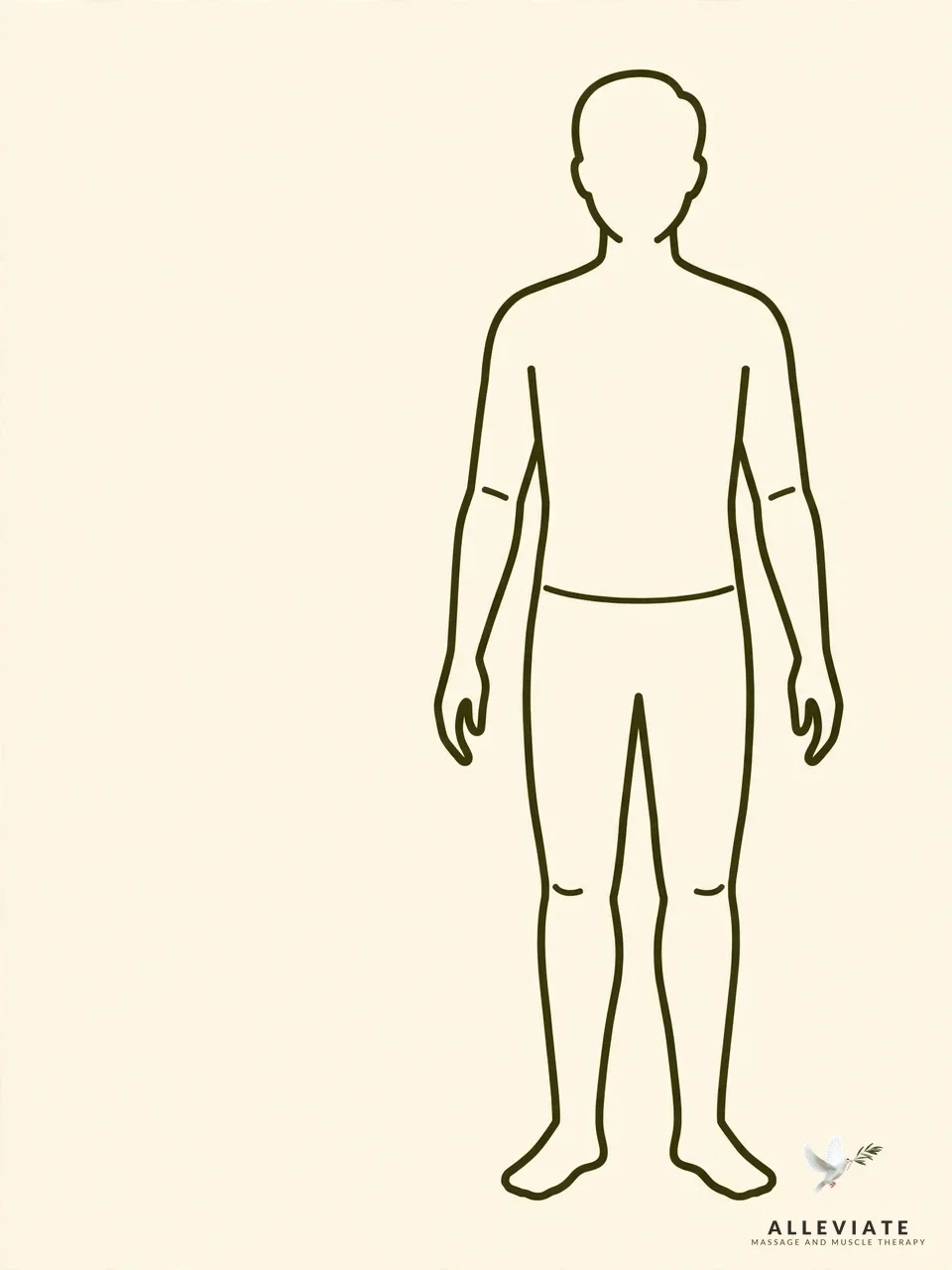
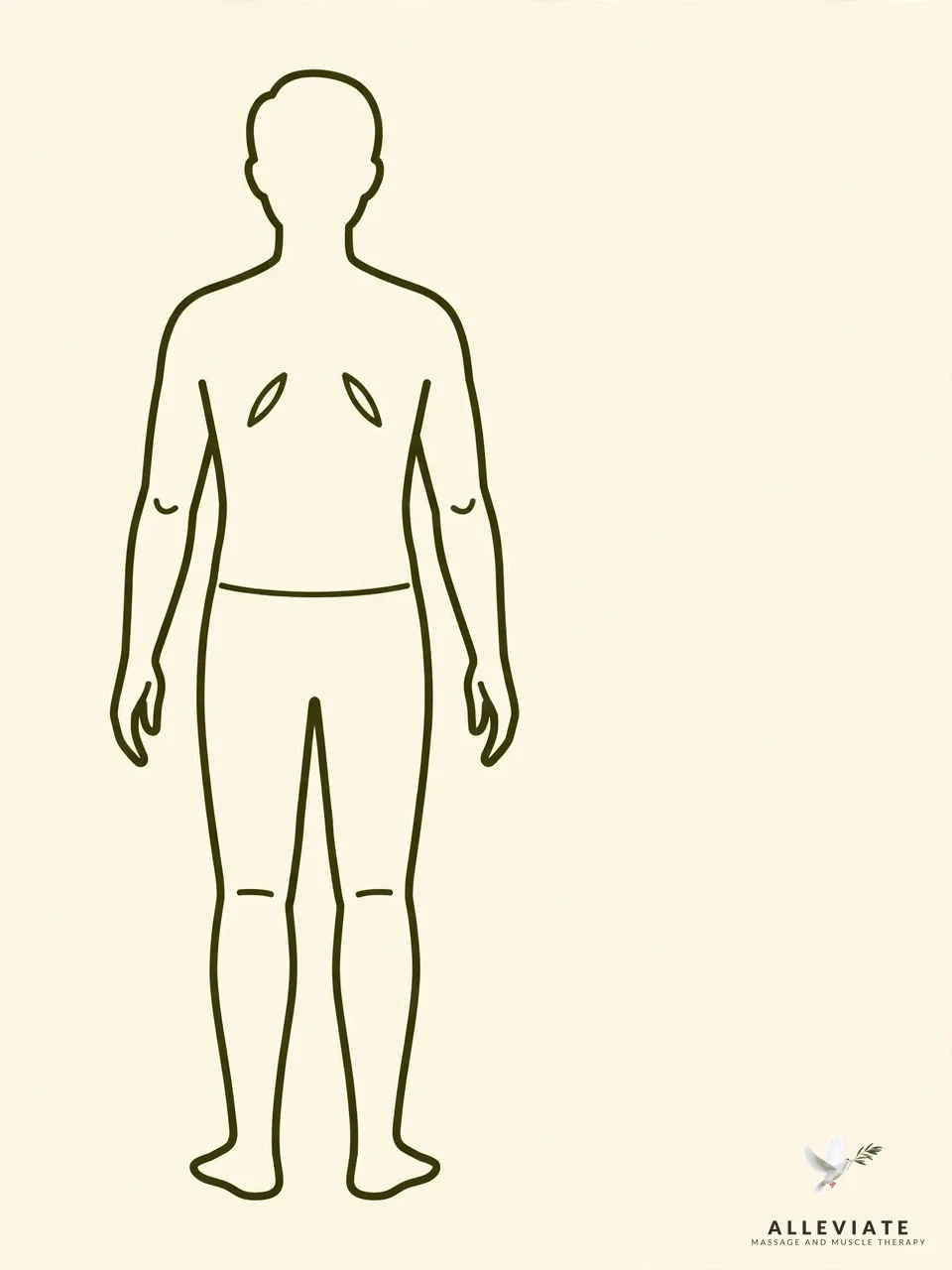
After a long day at a desk, on your feet, or working around the house, you might feel a little stiff. Pick a spot on the body map to find a gentle movement or self-massage tip you can try at home. This guide is for general education only and is not medical advice. If you have an injury or symptoms that worry you, check with a healthcare professional before trying the tips.
Tap a numbered spot on the figure where it feels tight, or pick an area from the list below.
1. Jaw (masseter)
Your strongest chewing muscle sits at the angle of your jaw. It works every time you eat, talk, or clench your teeth. You might notice jaw tightness after a stressful day, or wake up with it if you clench or grind your teeth at night.
Before you try it
Get medical care or see a dentist promptly if your jaw locks open or closed, you cannot open your mouth fully, one side of your face or jaw is swollen, or jaw pain follows an injury. Jaw pain that comes with chest pressure needs emergency care.
Try a gentle movement
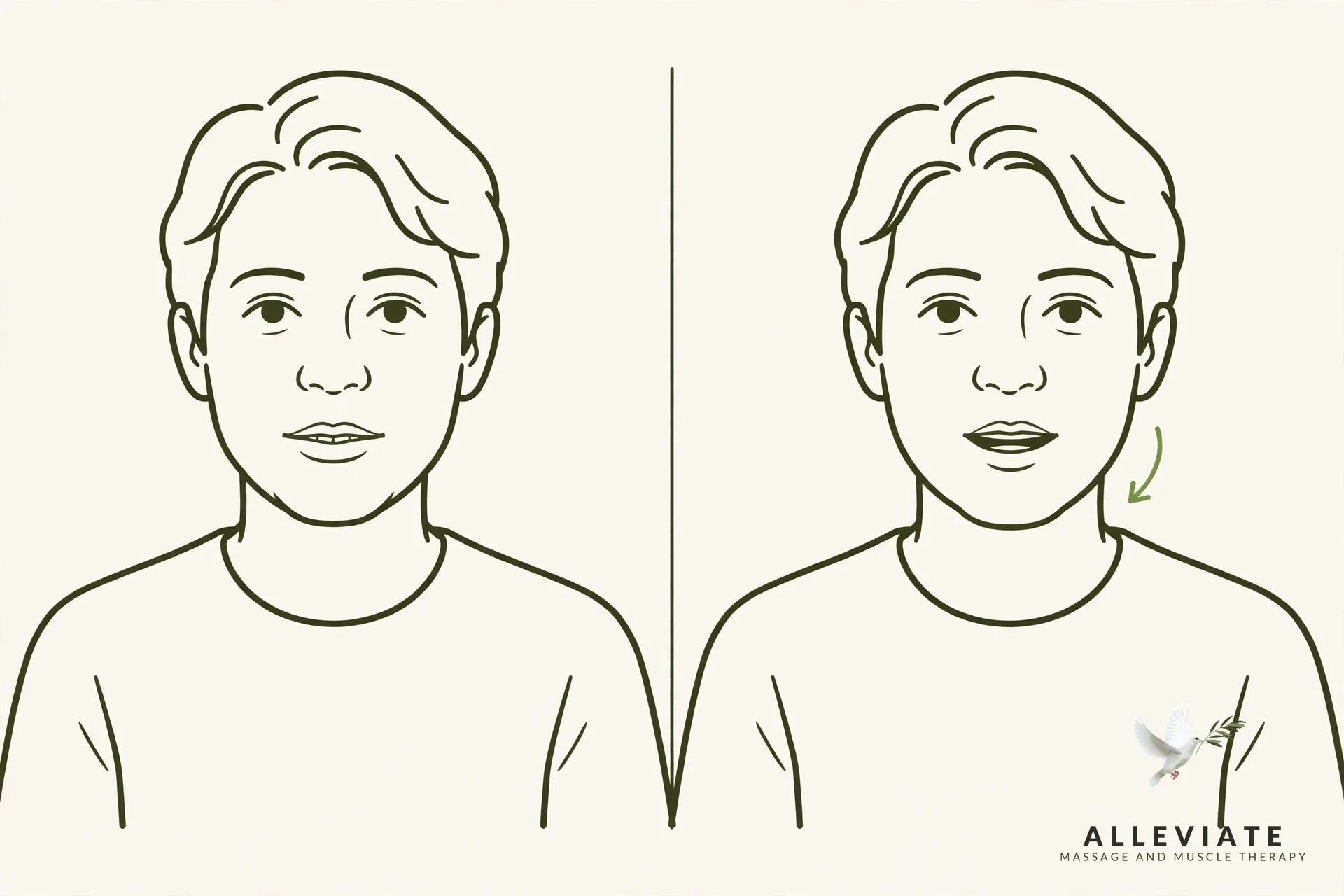
Let your lips rest together and your teeth sit slightly apart, with the tip of your tongue resting gently on the roof of your mouth. Let your jaw hang relaxed for a few slow breaths. Then open your mouth slowly, only as far as is comfortable, and close it slowly.
Try gentle self-massage
Place your fingertips on the muscle at the back corner of your jaw, below your cheekbone. Clench lightly once to feel it bulge, then relax and make small, gentle circles with light pressure.
Keep it comfortable
Stop if a move causes pain, tingling, or dizziness. If the discomfort keeps coming back or gets worse, check in with a healthcare professional.
Want a massage? Jaw and neck tension often travel together. If you would like help unwinding, you are welcome to book a session.
General education only. This is not medical advice, and it does not replace care from a healthcare professional.
2. Side of the neck (sternocleidomastoid)
A thick muscle runs from behind your ear down to the front of your neck, one on each side. It helps you turn your head and tip it toward your shoulder. You might notice it standing out when you turn to check a blind spot, or feel it working when you lift your head off the pillow.
Before you try it
Get medical care promptly if a stiff neck comes with fever or a severe headache, or if neck discomfort follows an injury. Discomfort that travels into your arm or hand with numbness, tingling, or weakness also needs prompt care. Sudden neck pain or a sudden severe headache that comes with dizziness, vision changes, or weakness on one side needs emergency care.
Try a gentle stretch
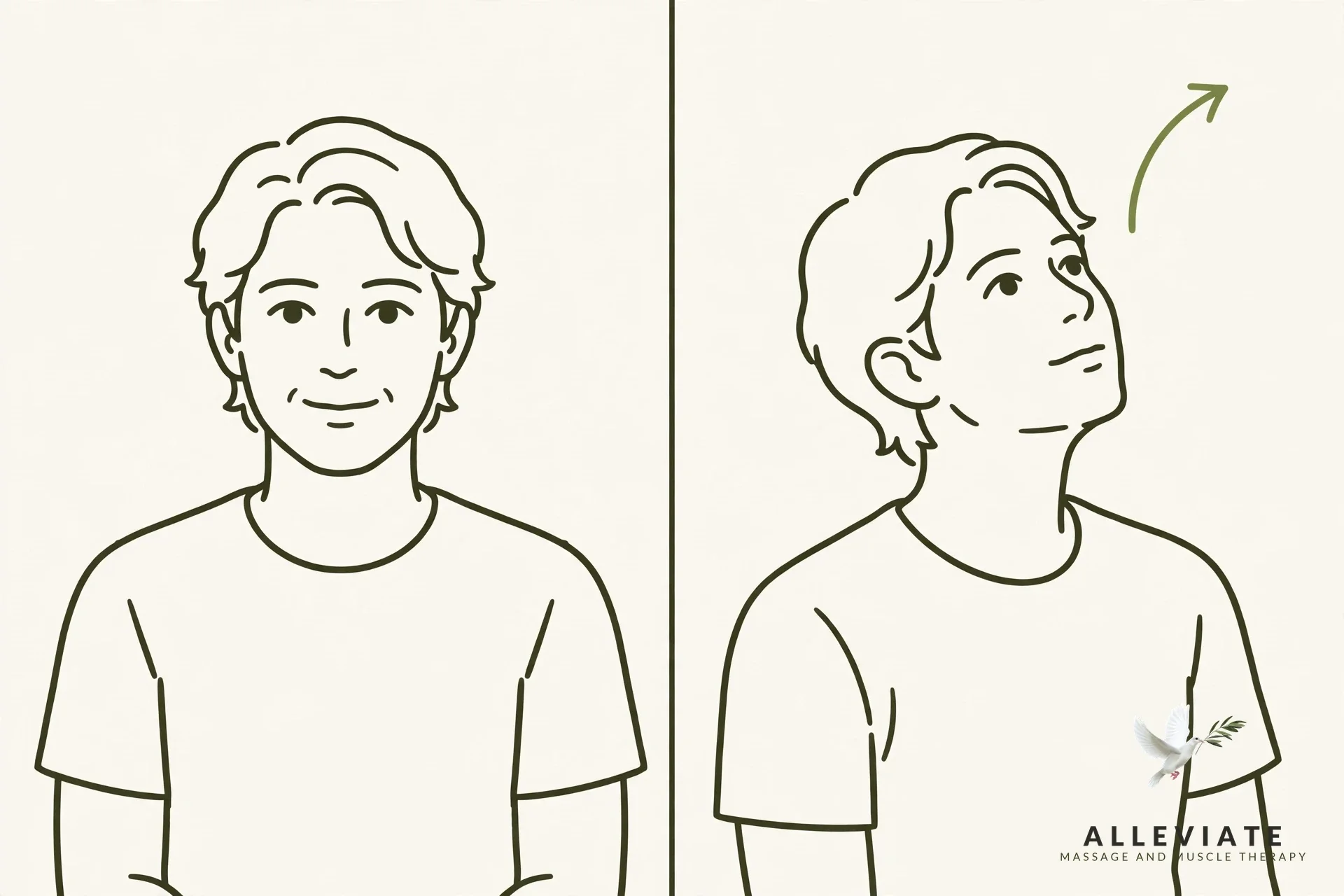
Sit tall and let your shoulders relax. Turn your head slowly to one side, then tip your ear back a little, as if looking up into the far corner of the ceiling. You may feel a light stretch along the front and side of your neck. Come back to the middle, then try the other side if it feels comfortable.
Try gentle self-massage
Find the thick band of muscle that runs from behind your ear down to the front of your neck. With two fingertips, make small, very gentle circles along that band, staying on the muscle itself and away from your throat. Keep the pressure light the whole time.
Keep it comfortable
Stop if a move causes pain, tingling, or dizziness. If the discomfort keeps coming back or gets worse, check in with a healthcare professional.
More self-care ideas for Side of the neck
Want a massage? The muscles at the side of the neck do quiet work all day long. If yours feel tight most days, you are welcome to book a session.
General education only. This is not medical advice, and it does not replace care from a healthcare professional.
3. Top of the shoulders (upper trapezius)
The muscles across the tops of your shoulders help you shrug and hold your head up. You might notice this area feels tight after a long stretch at your desk or a long drive.
Before you try it
Get medical care promptly if the discomfort started after an injury, travels down your arm, or comes with numbness, tingling, or weakness. If shoulder discomfort comes with chest pressure or shortness of breath, get emergency care.
Try a gentle stretch
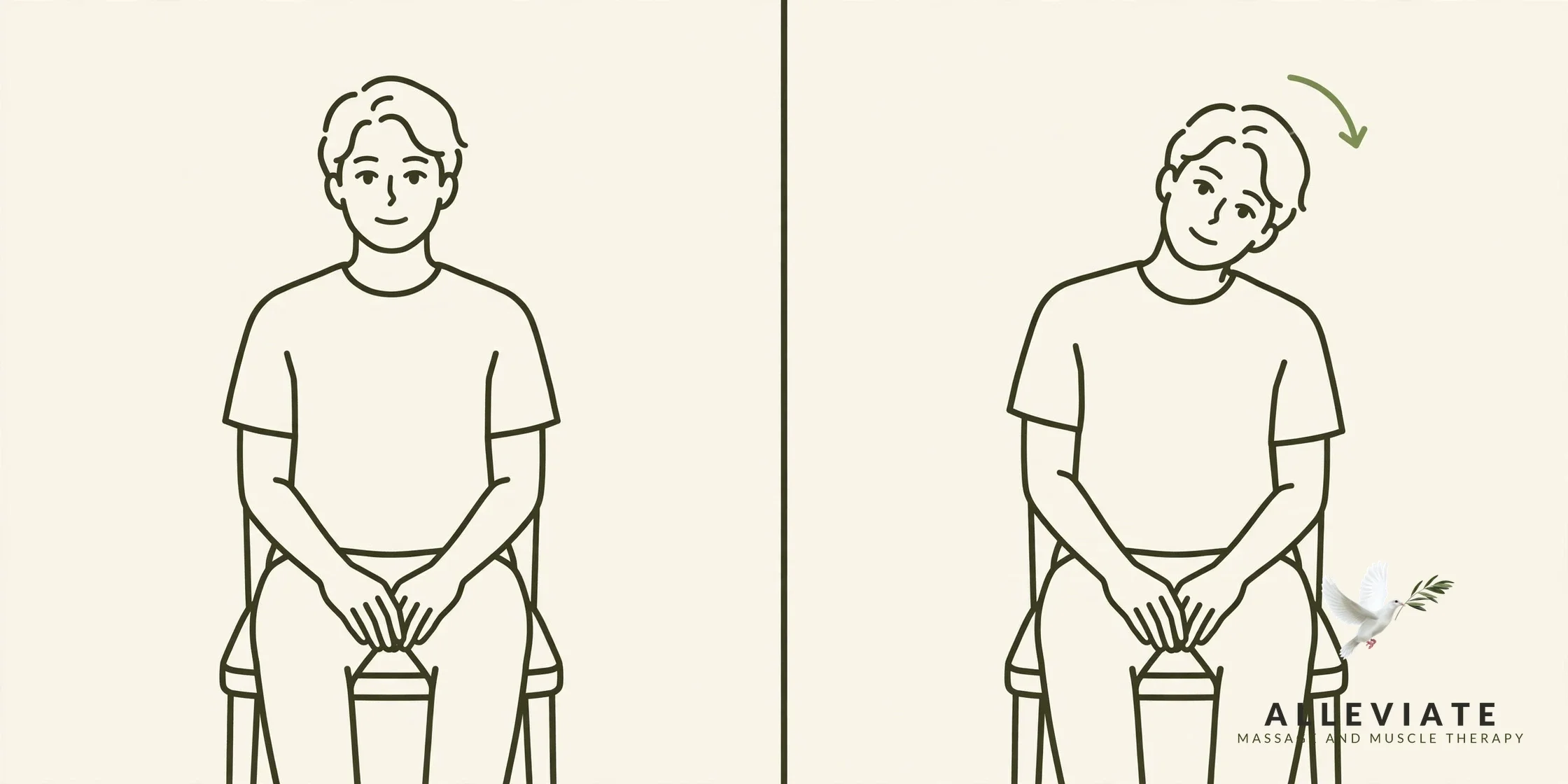
Sit with your feet flat and let your shoulders relax. Look straight ahead and slowly tilt one ear toward your shoulder, with your hands resting in your lap. You may feel a light stretch along the other side of your neck. Come back to the middle, then try the other side if it feels comfortable.
Try a tennis ball against the wall
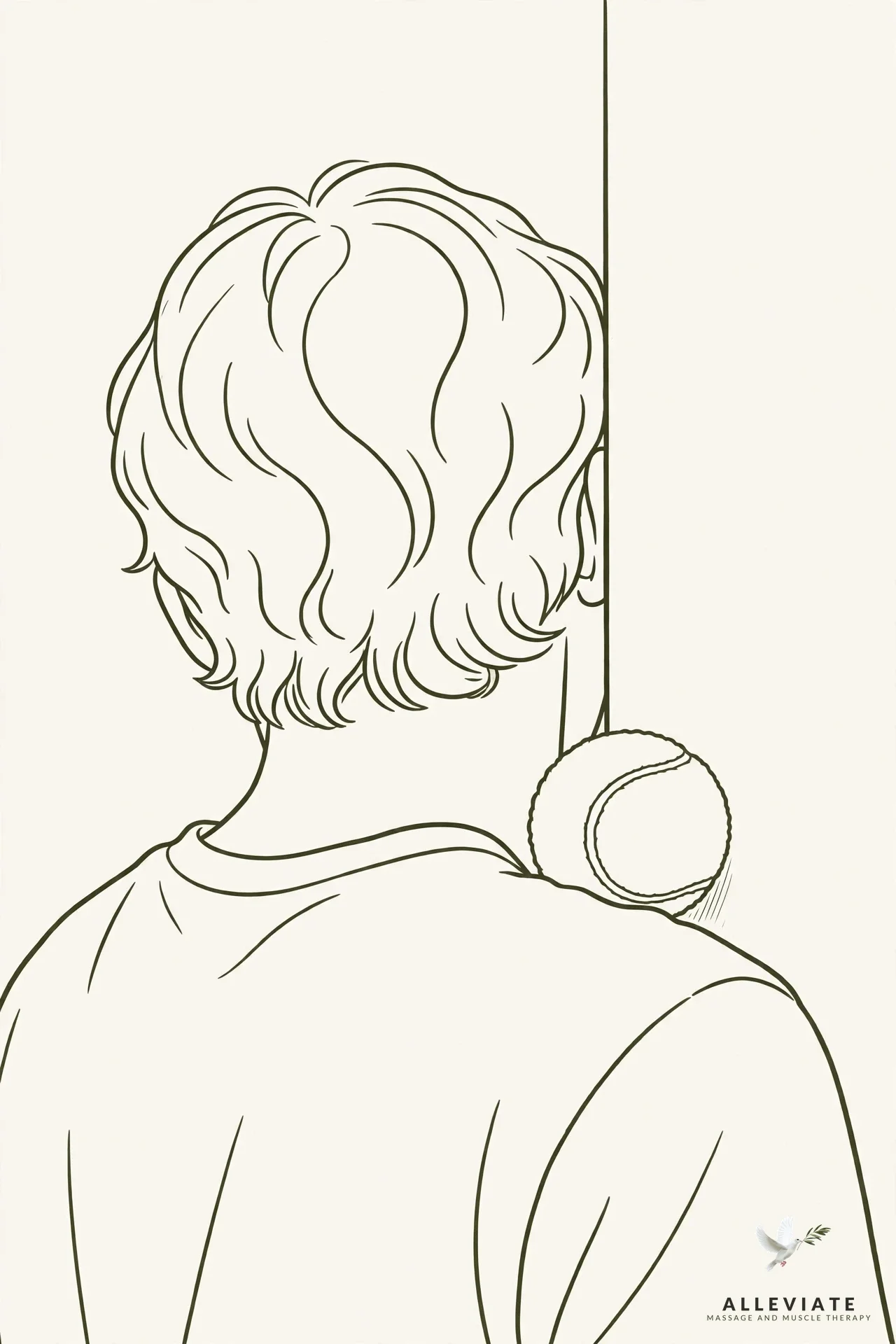
Place a tennis ball between the wall and the soft area at the top of one shoulder, toward the back. Keep it off your neck, spine, and shoulder blade. Lean back just enough to feel light pressure, then ease off.
Keep it comfortable
Stop if a move causes pain, tingling, or dizziness. If the discomfort keeps coming back or gets worse, check in with a healthcare professional.
More self-care ideas for Top of the shoulders
Want a massage? If you would like help unwinding after a long week at your desk, you are welcome to book a session.
General education only. This is not medical advice, and it does not replace care from a healthcare professional.
4. Where the neck meets the shoulder blade (levator scapulae)
A muscle runs from the side of your neck down to the top corner of your shoulder blade. It helps you turn your head and lift the shoulder blade. You might notice this spot feels stiff when you wake up, or after looking down at a screen for a long time. People often point right at the corner where the neck meets the shoulder and say: it hurts here.
Before you try it
Get medical care promptly if neck discomfort started after an injury or a fall, travels into your arm or hand, or comes with numbness, tingling, or weakness. Neck pain with fever, or a neck too stiff to bend, also needs prompt care.
Try a gentle stretch
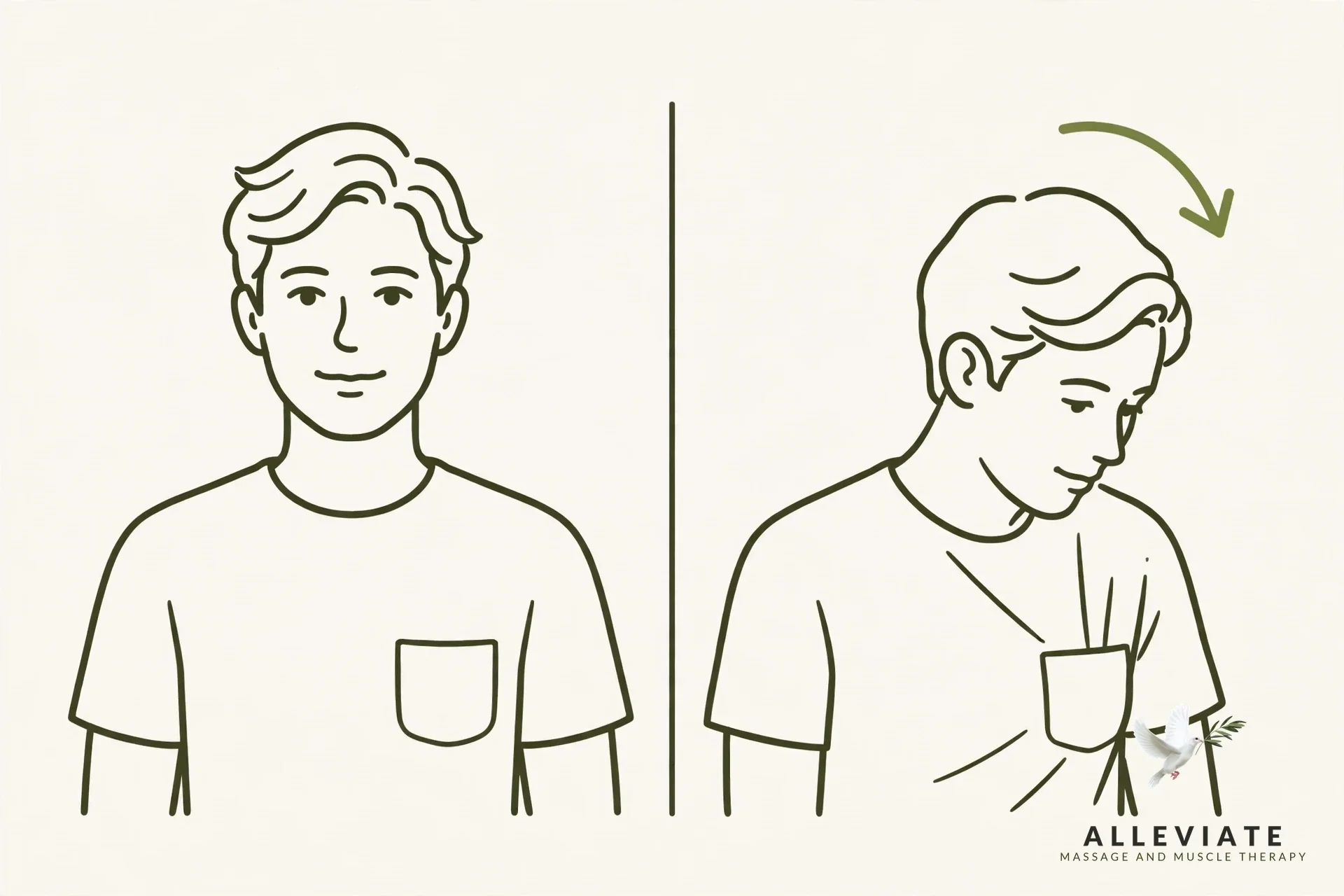
Sit tall and let your shoulders relax. Turn your head about halfway toward one side, then tip your chin down gently, as if looking into your shirt pocket. You may feel a light stretch in the back corner of your neck. Come back to the middle, then try the other side if it feels comfortable.
Try gentle self-massage
Use the fingers of the opposite hand to press gently into the soft spot where your neck meets the top of your shoulder. Keep the pressure light, breathe slowly, and ease off if it feels sharp.
Keep it comfortable
Stop if a move causes pain, tingling, or dizziness. If the discomfort keeps coming back or gets worse, check in with a healthcare professional.
More self-care ideas for Neck and shoulder blade
Want a massage? This corner is a favorite spot for stress to settle. If yours feels stuck most weeks, you are welcome to book a session.
General education only. This is not medical advice, and it does not replace care from a healthcare professional.
5. Shoulders (deltoids)
The rounded muscle that caps your shoulder lifts your arm out to the side and helps you reach overhead. It works when you hang laundry, lift a child, or put things up on a high shelf. You might notice it feeling tired after painting a ceiling or carrying bags.
Before you try it
Get medical care promptly if shoulder discomfort follows a fall or injury, you cannot lift your arm, or the shoulder looks out of place. Discomfort that comes with numbness or weakness in the arm also needs a check. Shoulder discomfort that comes with chest pressure or shortness of breath needs emergency care.
Try a gentle stretch
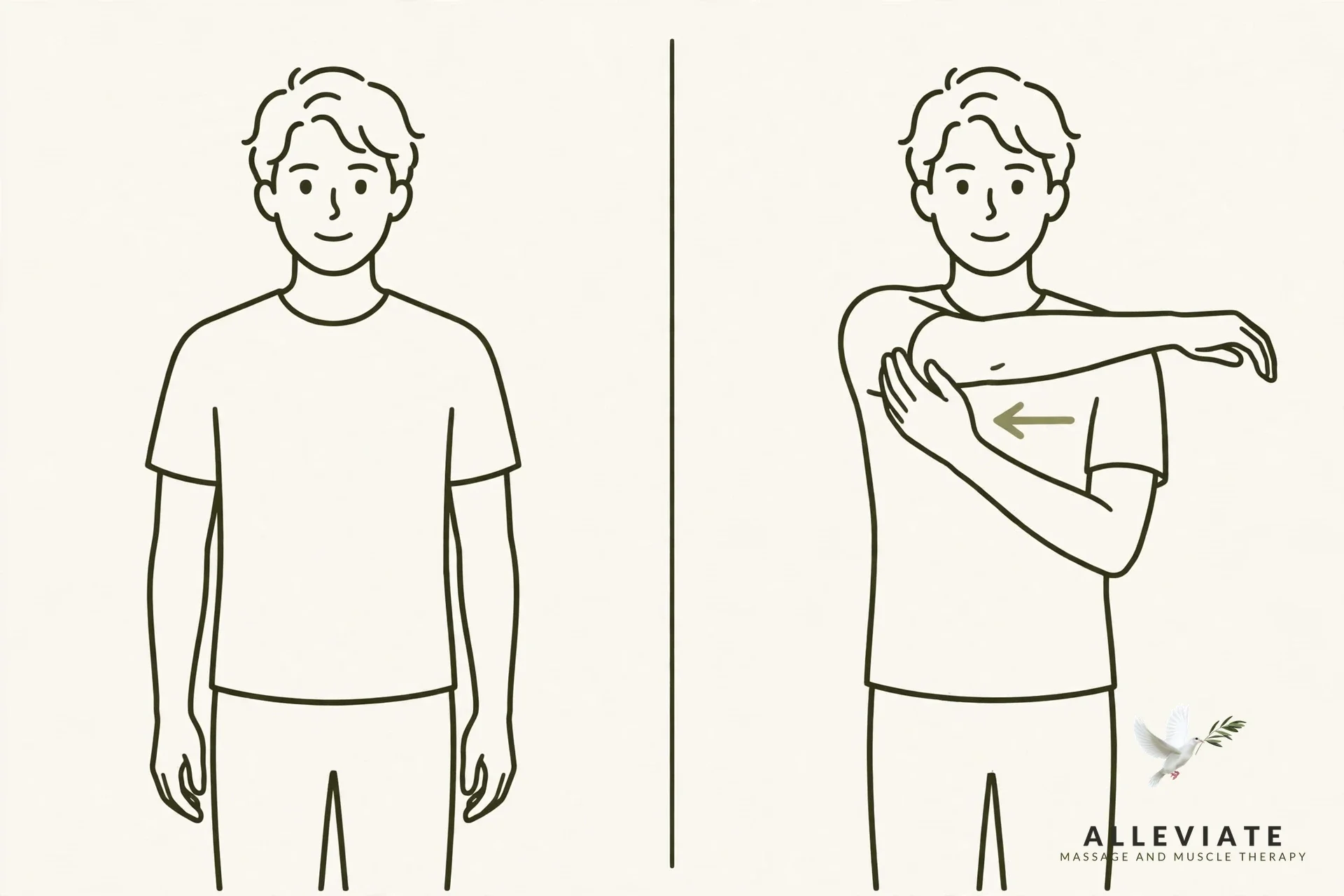
Bring one arm across the front of your body at about shoulder height. With your other hand, gently ease that arm a little closer to your chest until you feel a light stretch in the shoulder. Hold for a few slow breaths, then switch sides.
Try gentle self-massage
Use the fingers of the opposite hand to make slow circles over the round part of the shoulder, keeping the pressure light to moderate. A tennis ball between the shoulder and a wall works too: lean in gently and roll it in small, slow moves.
Keep it comfortable
Stop if a move causes pain, tingling, or dizziness. If the discomfort keeps coming back or gets worse, check in with a healthcare professional.
More self-care ideas for Shoulders
Want a massage? Shoulders carry more of the day than we give them credit for. If yours feel heavy or tight, you are welcome to book a session.
General education only. This is not medical advice, and it does not replace care from a healthcare professional.
6. Chest (pectorals)
The broad muscles of your chest help you push, hug, and bring your arms across your body. They work when you push a heavy door, push a cart, or press yourself up from a chair. You might notice your chest feels tight after a long day of reaching forward at a desk or on the road.
Before you try it
Chest discomfort should always be taken seriously. Get emergency care for chest pressure, squeezing, or pain, especially if it spreads to your arm, jaw, or back, or comes with shortness of breath, sweating, or nausea. See a doctor promptly for any new lump, skin change, or nipple change in the chest or breast area.
Try a gentle stretch
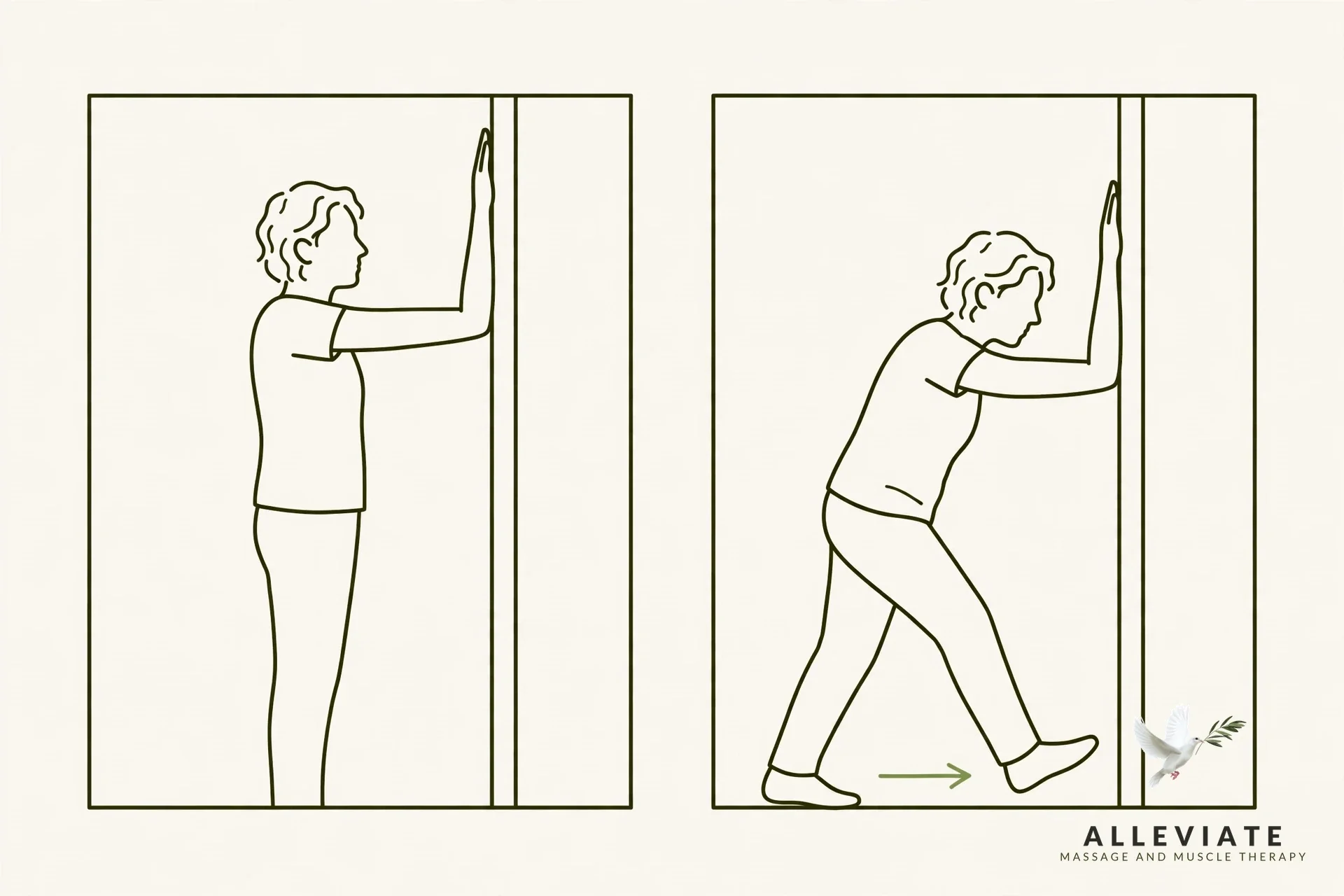
Stand in a doorway and place one forearm flat against the frame, with your elbow about shoulder height. Step the foot on that side forward and lean gently through the doorway until you feel a light stretch across your chest. Hold for a few slow breaths, then switch sides.
Try gentle self-massage
Place the flat of your fingers on the broad part of your chest, just below your collarbone. Make slow, gentle circles with light pressure, working across the muscle and staying off any tender breast tissue. Keep it easy; this area does not need much pressure.
Keep it comfortable
Stop if a move causes pain, tingling, or dizziness. If the discomfort keeps coming back or gets worse, check in with a healthcare professional.
More self-care ideas for Chest
Want a massage? A tight chest can make the whole upper body feel closed in. If that sounds familiar, you are welcome to book a session.
General education only. This is not medical advice, and it does not replace care from a healthcare professional.
7. Between the shoulder blades (rhomboids)
Small muscles between your shoulder blades pull the blades together when you row, reach behind you, or sit up tall. You might notice this area aching after a long drive, or after a day of leaning over a workbench or a project.
Before you try it
Get medical care promptly if pain between the shoulder blades is severe, came on suddenly, or follows an injury. Pain in this area that comes with chest pressure, shortness of breath, or sweating needs emergency care.
Try a gentle stretch
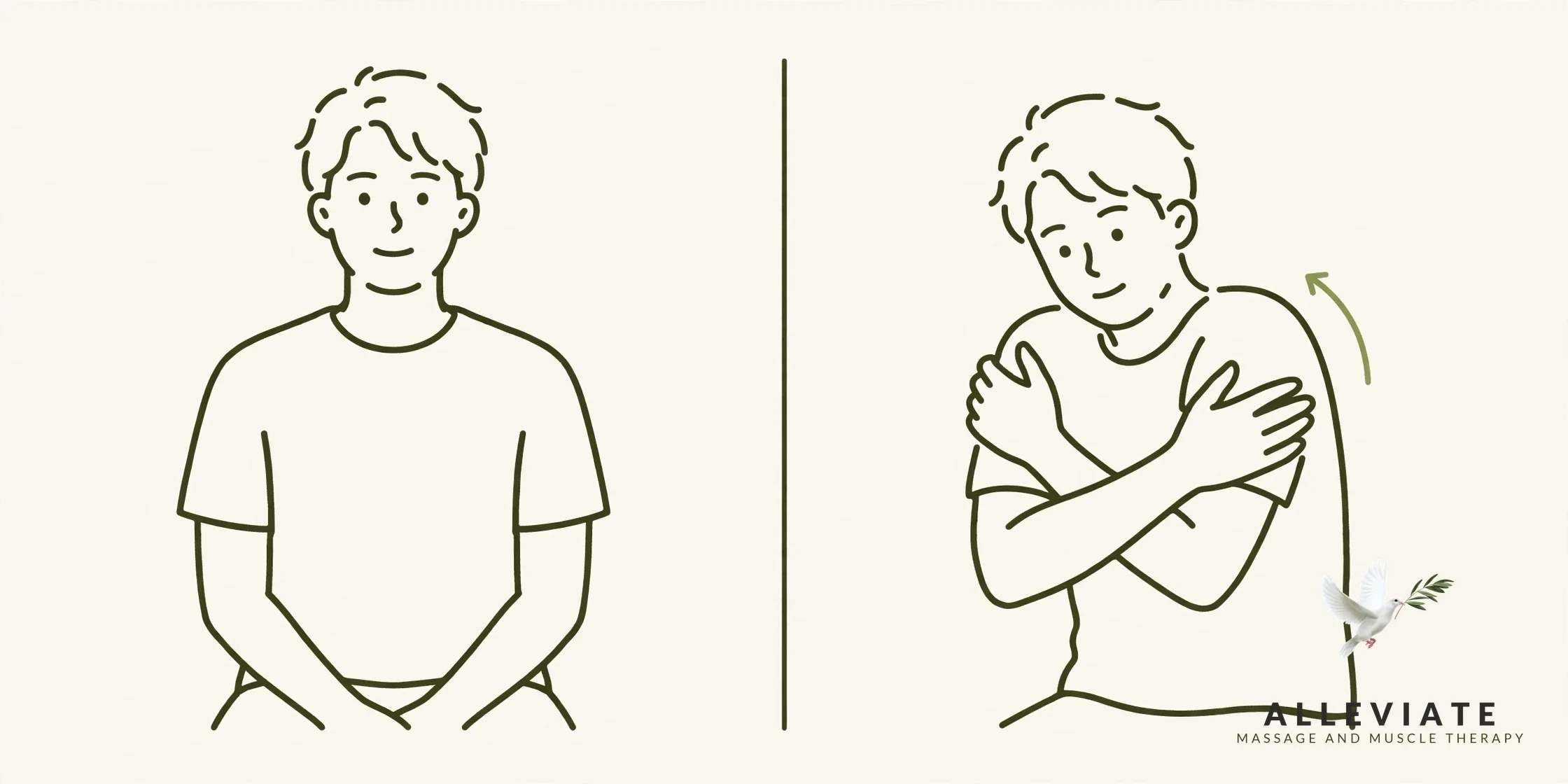
Cross your arms in front of you and give yourself a hug, with each hand reaching toward the opposite shoulder blade. Gently round your upper back and let your chin drop a little. You may feel a light stretch between your shoulder blades. Breathe slowly, then let go.
Try a tennis ball against the wall
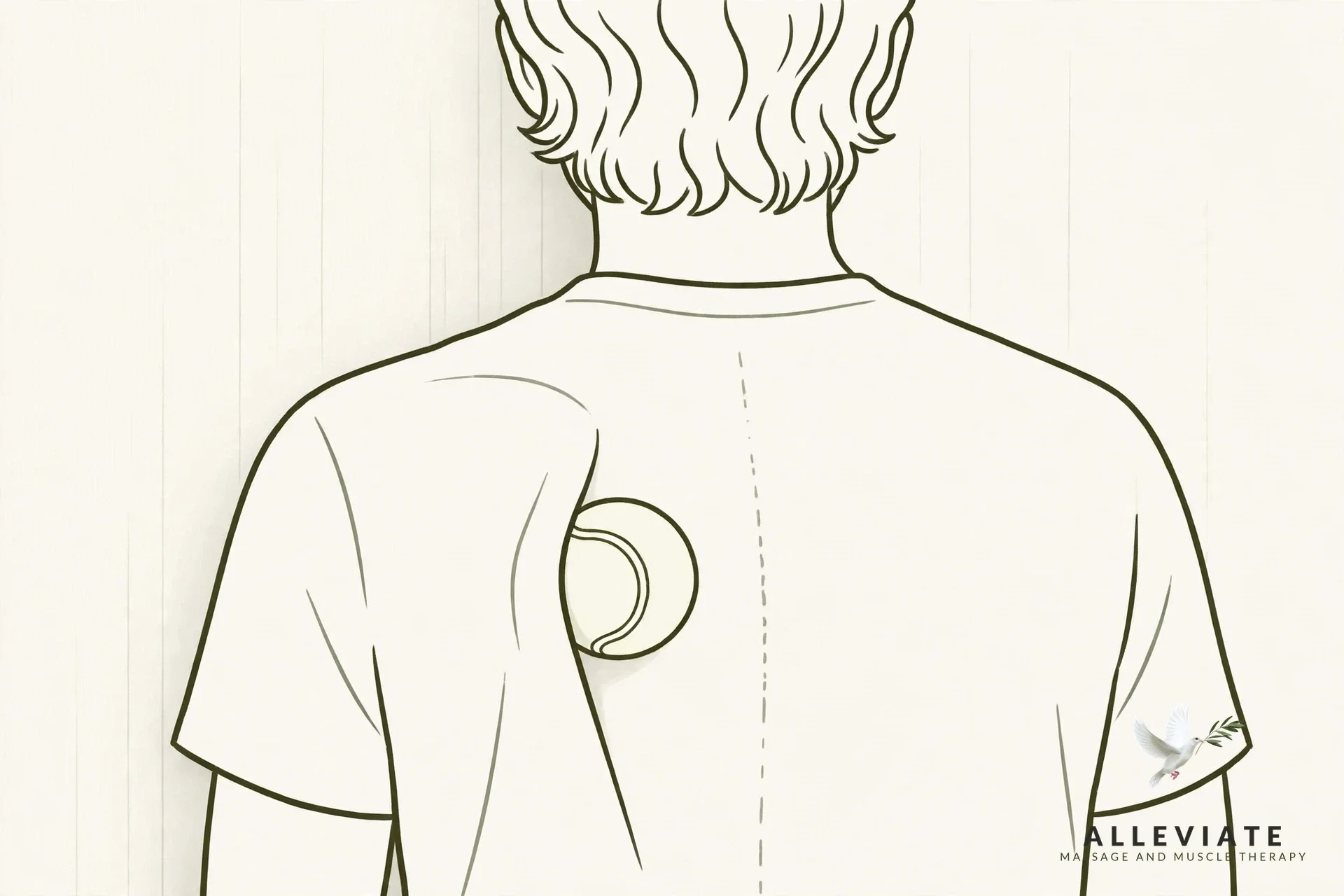
Place a tennis ball between a wall and the area just inside one shoulder blade. Keep it off your spine. Lean back gently until you feel light pressure, then make small, slow shifts to roll it a little. Ease off and switch sides.
Keep it comfortable
Stop if a move causes pain, tingling, or dizziness. If the discomfort keeps coming back or gets worse, check in with a healthcare professional.
More self-care ideas for Between the shoulder blades
Want a massage? The space between the shoulder blades is a spot most people cannot reach well on their own. If yours aches most weeks, you are welcome to book a session.
General education only. This is not medical advice, and it does not replace care from a healthcare professional.
8. Front of the upper arm (biceps)
The muscle at the front of your upper arm bends your elbow and helps you lift and carry. It works every time you pick up a grocery bag, a laundry basket, or a toolbox. You might notice it feeling tired or tight after a day of lifting and carrying.
Before you try it
Get medical care promptly if upper arm discomfort follows an injury, comes with a lot of swelling or bruising, or you heard or felt a pop. Weakness when you bend your elbow or turn your palm up also needs a check.
Try a gentle stretch
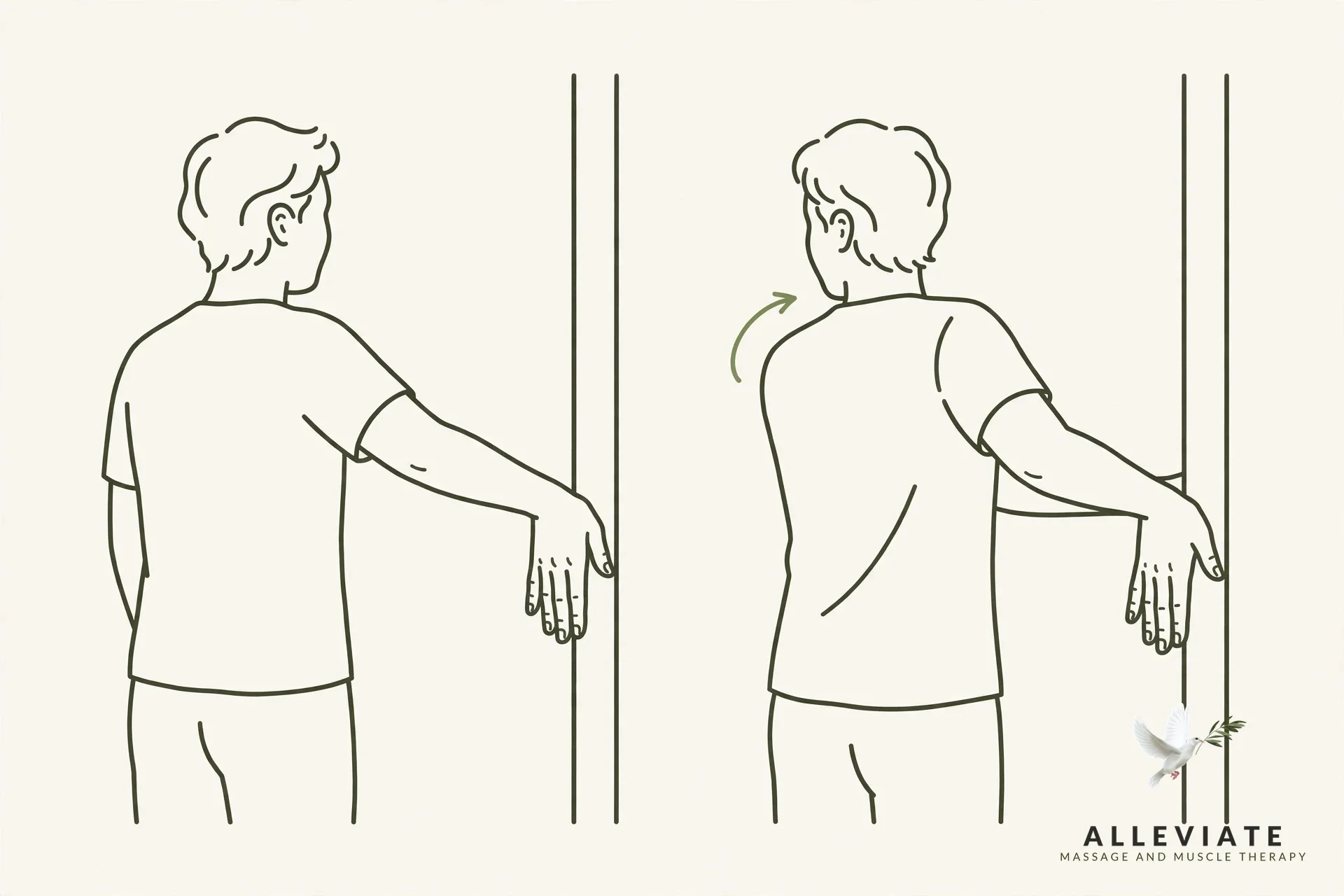
Stand beside a wall and place your palm flat on it behind you, with your arm straight and your fingers pointing down. Turn your body gently away from the wall until you feel a light stretch along the front of your upper arm. Hold for a few slow breaths, then switch sides.
Try gentle self-massage
Rest your arm on your leg or on a table. Use the fingers and thumb of the other hand to gently squeeze and release along the front of your upper arm, keeping the pressure light to moderate.
Keep it comfortable
Stop if a move causes pain, tingling, or dizziness. If the discomfort keeps coming back or gets worse, check in with a healthcare professional.
More self-care ideas for Front of the upper arm
Want a massage? Arms that lift and carry all day deserve a break too. If yours feel tired most days, you are welcome to book a session.
General education only. This is not medical advice, and it does not replace care from a healthcare professional.
9. Back of the upper arm (triceps)
The muscle at the back of your upper arm straightens your elbow. It helps you push yourself up from a chair, push a door shut, and get up off the floor. You might notice it working during yard work, or when you press down to lift yourself out of a low seat.
Before you try it
Get medical care promptly if discomfort at the back of the arm follows an injury, comes with swelling or bruising, or you cannot straighten your elbow. Tingling in the ring and little fingers that does not go away also deserves a check.
Try a gentle stretch
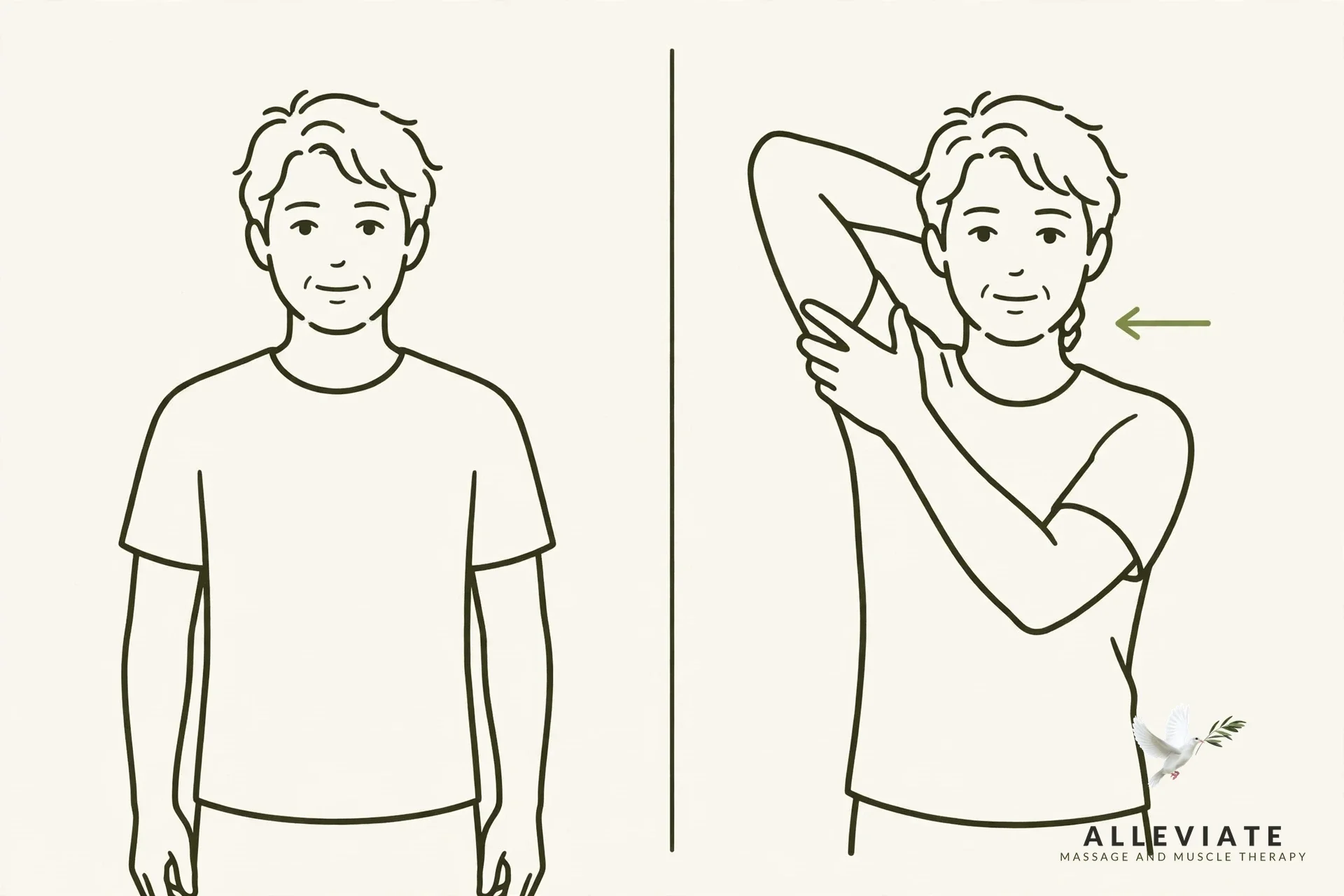
Lift one arm overhead and bend the elbow so your hand rests behind your neck. With your other hand, gently ease that elbow back a little until you feel a light stretch along the back of your upper arm. Hold for a few slow breaths, then switch sides.
Try gentle self-massage
Let the arm hang relaxed at your side. Use the fingers of the other hand to gently squeeze and release along the back of your upper arm, keeping the pressure light to moderate.
Keep it comfortable
Stop if a move causes pain, tingling, or dizziness. If the discomfort keeps coming back or gets worse, check in with a healthcare professional.
More self-care ideas for Back of the upper arm
Want a massage? The backs of the arms are easy to forget until they feel tired. If pushing and lifting fill your days, you are welcome to book a session.
General education only. This is not medical advice, and it does not replace care from a healthcare professional.
10. Forearms
Your forearm muscles move your fingers and wrists. They work hard at keyboards, on tools, on steering wheels, and carrying groceries or kids. You might notice them feeling tired or tight after a day of gripping and typing.
Before you try it
Get medical care promptly if forearm or hand discomfort comes with numbness or tingling that does not go away, weakness, dropping things, or swelling after an injury.
Try a gentle stretch
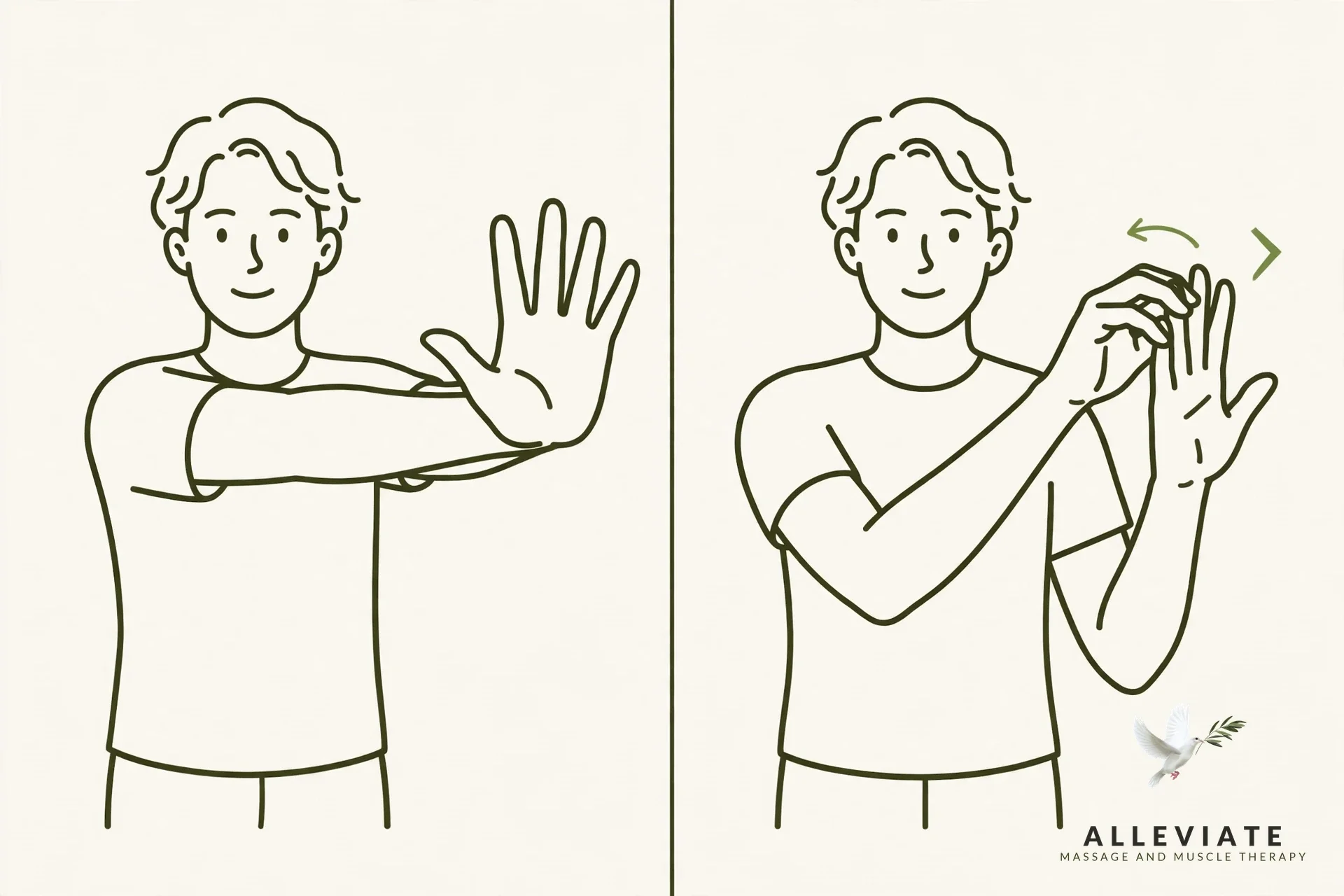
Hold one arm out in front of you with your palm facing away, as if signaling stop. With your other hand, gently ease your fingers back until you feel a light stretch along the inside of your forearm. Hold for a few slow breaths, then switch sides. If it feels comfortable, repeat with your palm facing down and fingers pointing down to stretch the top side.
Try gentle self-massage
Rest your forearm on a table, palm down. Use the thumb or knuckles of your other hand to press slowly along the meaty part of the forearm, keeping the pressure light to moderate. A tennis ball on the table works too: rest your forearm on it and roll slowly.
Keep it comfortable
Stop if a move causes pain, tingling, or dizziness. If the discomfort keeps coming back or gets worse, check in with a healthcare professional.
More self-care ideas for Forearms
Want a massage? Forearms respond well to hands-on work. If yours feel tired most days, you are welcome to book a session.
General education only. This is not medical advice, and it does not replace care from a healthcare professional.
11. Hands
Small muscles in your hands and fingers help you grip, pinch, type, and button a shirt. They work all day in small ways that add up. You might notice your hands feeling stiff or tired after gardening, typing, or a long drive.
Before you try it
Get medical care promptly if hand discomfort comes with numbness or tingling that does not go away, fingers that turn white or blue, weakness, or swelling after an injury. A hand that is hot, red, and swollen also needs prompt care.
Try a gentle movement
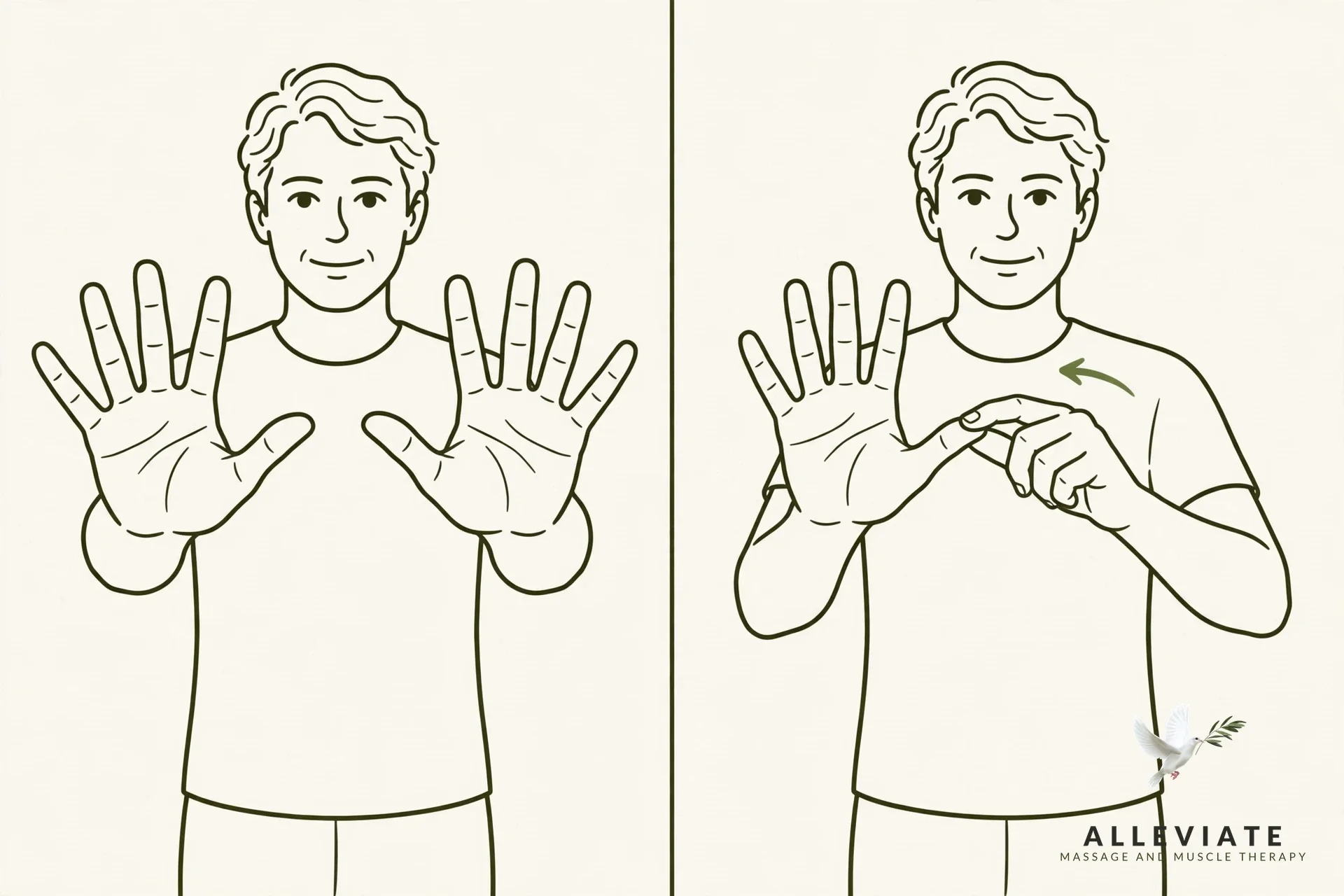
Open your hands wide and spread your fingers apart, and hold for a slow breath. Then close your hands slowly into soft fists and open them again. After that, gently ease each finger back, one at a time, only as far as is comfortable.
Try gentle self-massage
Use the thumb of one hand to make small, gentle circles in the meaty part of the other palm, below the thumb. Then gently squeeze along each finger from base to tip. Keep the pressure light and pleasant.
Keep it comfortable
Stop if a move causes pain, tingling, or dizziness. If the discomfort keeps coming back or gets worse, check in with a healthcare professional.
More self-care ideas for Hands
Want a massage? Hands rarely get a rest. If yours feel stiff or tired most days, you are welcome to book a session.
General education only. This is not medical advice, and it does not replace care from a healthcare professional.
12. Sides of the waist (obliques)
Muscles at the sides of your waist help you twist and bend to the side. They work when you reach into the back seat, swing a tool, or turn to talk to someone beside you. You might notice them after a day of raking, shoveling, or moving boxes.
Before you try it
Get medical care promptly if side or waist discomfort comes with fever, trouble breathing, or pain that wraps around into your back. Sudden, severe pain in your side, or side pain with blood in your urine, needs prompt care too.
Try a gentle stretch
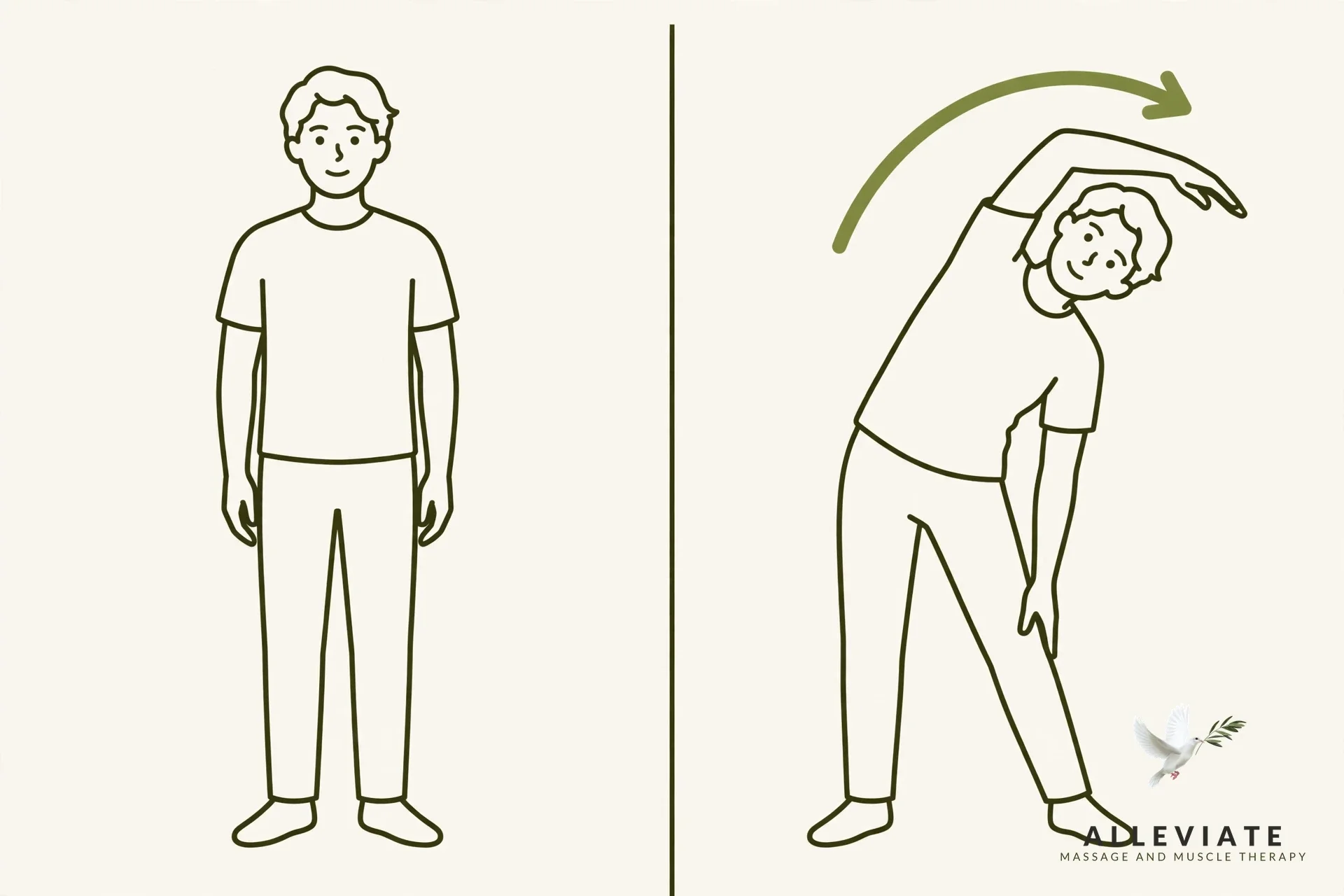
Stand with your feet about hip width apart. Slide one hand slowly down the side of your leg while the other arm reaches up and over your head, bending gently to the side. You may feel a light stretch along the opposite side of your waist. Come back up slowly, then try the other side.
Try gentle self-massage
Place your fingertips along the side of your waist, above your hip bone. Make small, gentle circles with light pressure, staying on the soft muscle and off your ribs and hip bone.
Keep it comfortable
Stop if a move causes pain, tingling, or dizziness. If the discomfort keeps coming back or gets worse, check in with a healthcare professional.
More self-care ideas for Sides of the waist
Want a massage? The sides of the waist are hard to reach and easy to ignore. If twisting feels stiff most days, you are welcome to book a session.
General education only. This is not medical advice, and it does not replace care from a healthcare professional.
13. Belly (abdominals)
The muscles of your belly support your trunk and help you sit up, bend, and breathe deeply. They work quietly all day to steady you when you lift, carry, and move. You might notice them feeling tired after a day of heavy lifting, or after a lot of coughing.
Before you try it
Get medical care promptly for belly pain that is severe, keeps getting worse, or comes with fever, vomiting, or a hard, swollen belly. Belly pain that comes with chest pressure or shortness of breath needs emergency care. If you are pregnant, or you have had recent surgery on your belly, check with your doctor before trying the movements below.
Try a gentle movement
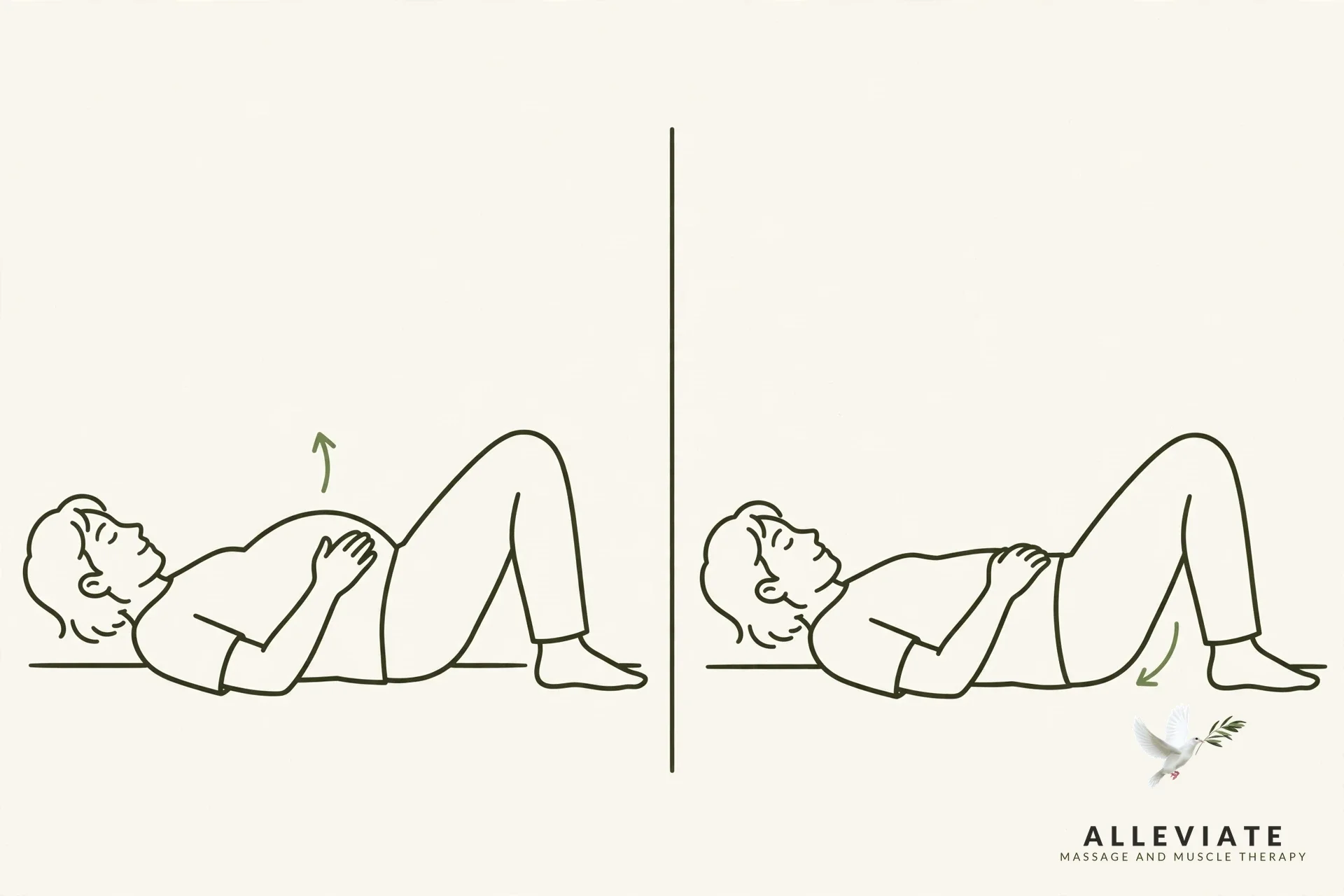
Lie on your back with your knees bent and one hand resting on your belly. Breathe in slowly and let your belly rise under your hand, then breathe out and let it fall. Keep your shoulders and jaw relaxed. A few slow breaths like this give the muscles of your belly a chance to soften.
Try a gentle rocking movement
Stay on your back with your knees bent and your feet flat. Gently flatten your low back toward the floor by tipping your pelvis up a little, then let it roll back down. Move slowly, as if rocking, and keep the movement small and easy.
Keep it comfortable
Stop if a move causes pain, tingling, or dizziness. If the discomfort keeps coming back or gets worse, check in with a healthcare professional.
More self-care ideas for Belly
Want a massage? The muscles of your middle work quietly in the background of everything you do. If yours feel tight or tired, you are welcome to book a session.
General education only. This is not medical advice, and it does not replace care from a healthcare professional.
14. Low back
The muscles along your low back help you stand, bend, and lift. You might notice this area feels stiff after sitting for a long time, after yard work, or first thing in the morning.
Before you try it
Get medical care promptly if back discomfort comes with new bladder or bowel changes, numbness around the groin or inner thighs, weakness in a leg, or fever, or if it follows a fall or injury. Pain that keeps getting worse instead of easing also deserves a check.
Try a gentle stretch
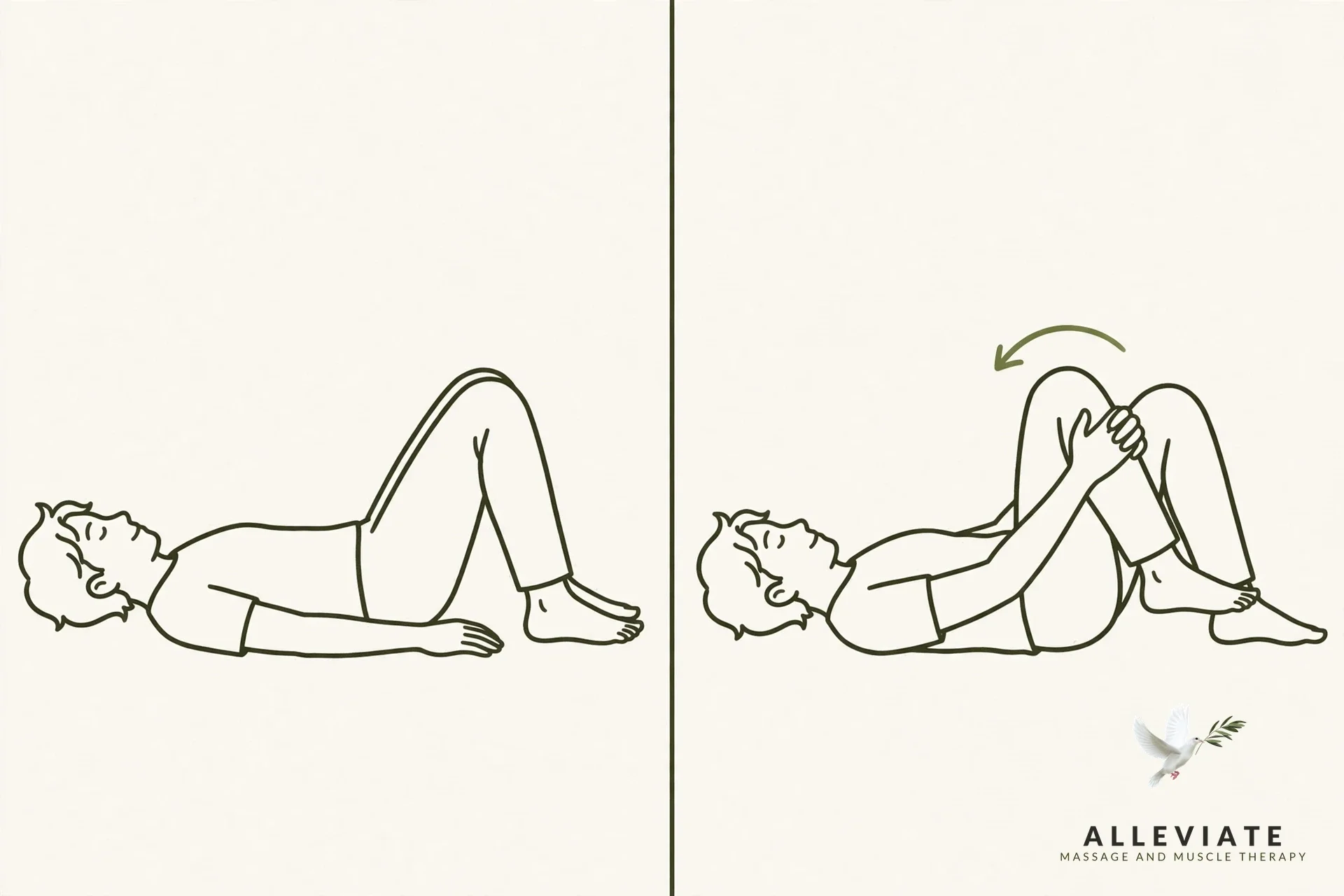
Lie on your back with your knees bent and your feet flat. Gently hug one knee toward your chest with both hands, only as far as is comfortable. You may feel a light stretch in your low back. Lower it slowly and try the other side.
Try gentle self-massage
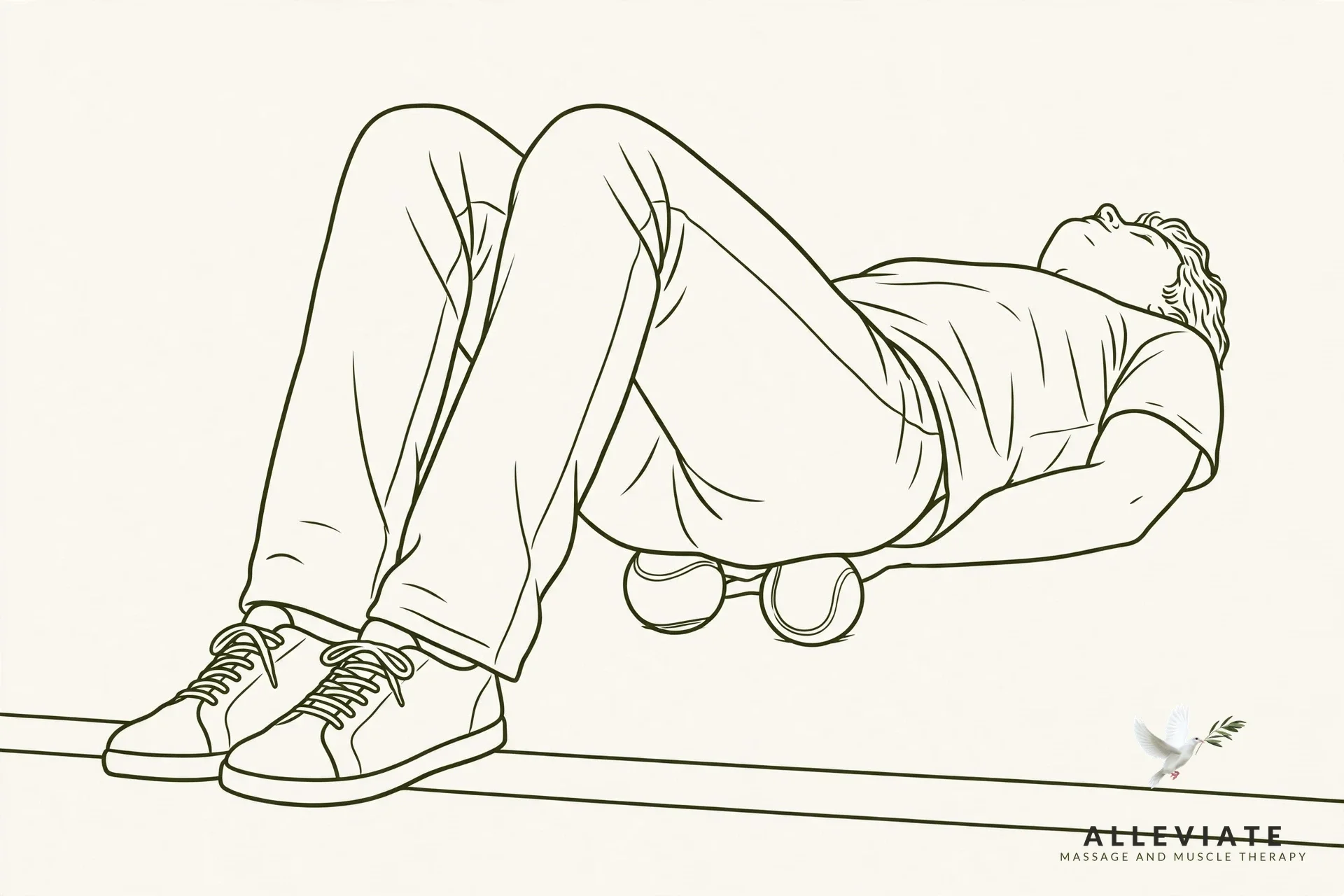
Lie on your back on the floor with two tennis balls inside a sock, one ball resting on each side of your spine at the low back, never on the spine itself. Let your weight settle onto them with light pressure for a few slow breaths, then roll to one side to get up.
Keep it comfortable
Stop if a move causes pain, tingling, or dizziness. If the discomfort keeps coming back or gets worse, check in with a healthcare professional.
More self-care ideas for Low back
Want a massage? Low backs carry a lot of the day. If stiffness is a regular visitor, you are welcome to book a session.
General education only. This is not medical advice, and it does not replace care from a healthcare professional.
15. Front of the hip (hip flexors)
Muscles at the front of your hip lift your knee and help you walk and climb stairs. When you sit, they rest in a shortened position for hours at a time. You might notice the front of your hip feels tight when you stand up after sitting for a long while.
Before you try it
Get medical care promptly if hip or groin discomfort follows a fall or injury, you cannot put weight on that leg, or it comes with fever or swelling.
Try a gentle stretch
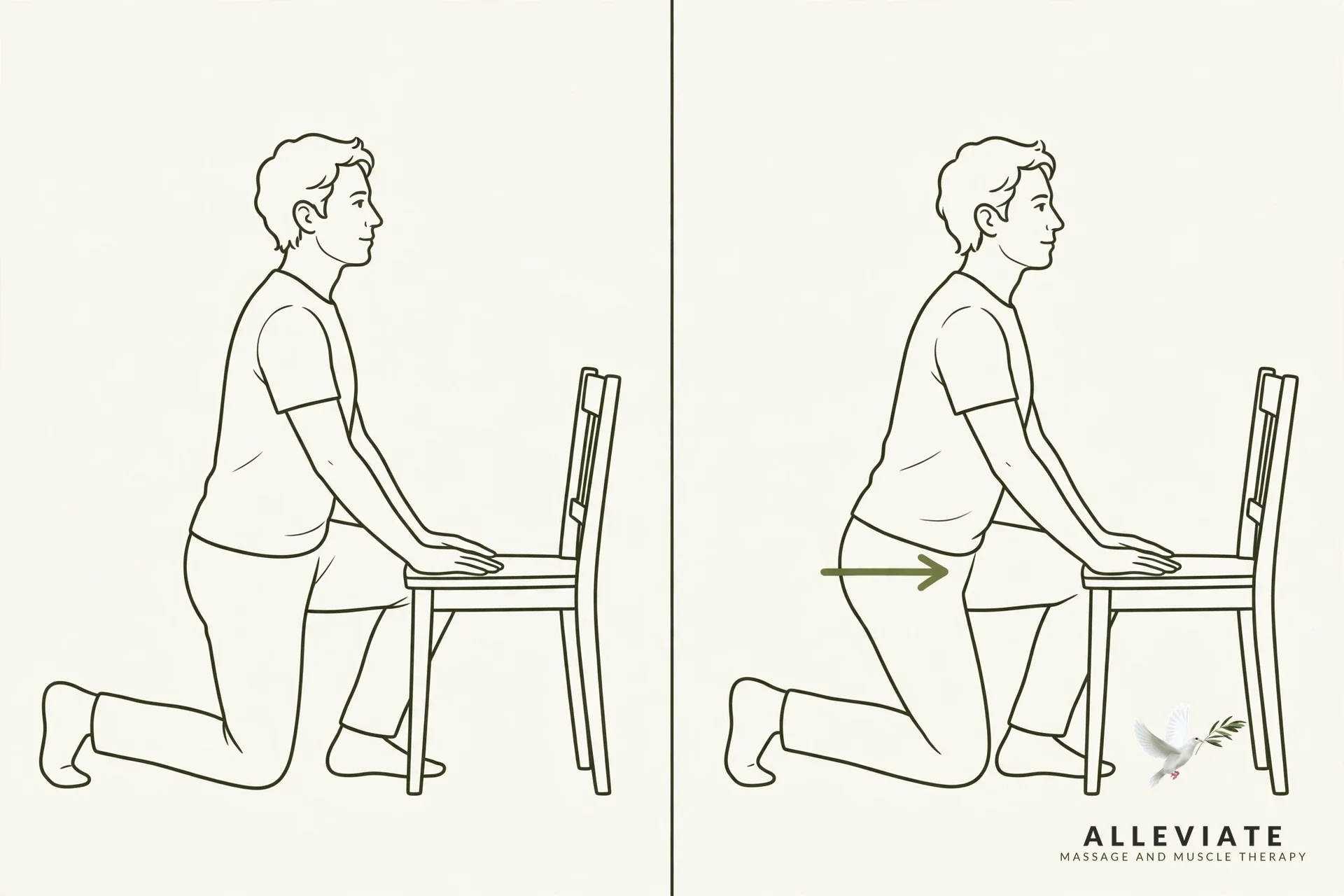
Kneel on one knee with your other foot flat on the floor in front of you, like a short lunge, and hold a chair for balance. Tuck your tailbone under slightly and shift your hips forward a little until you feel a light stretch at the front of the hip of the kneeling leg. Hold for a few slow breaths, then switch sides.
Try gentle self-massage
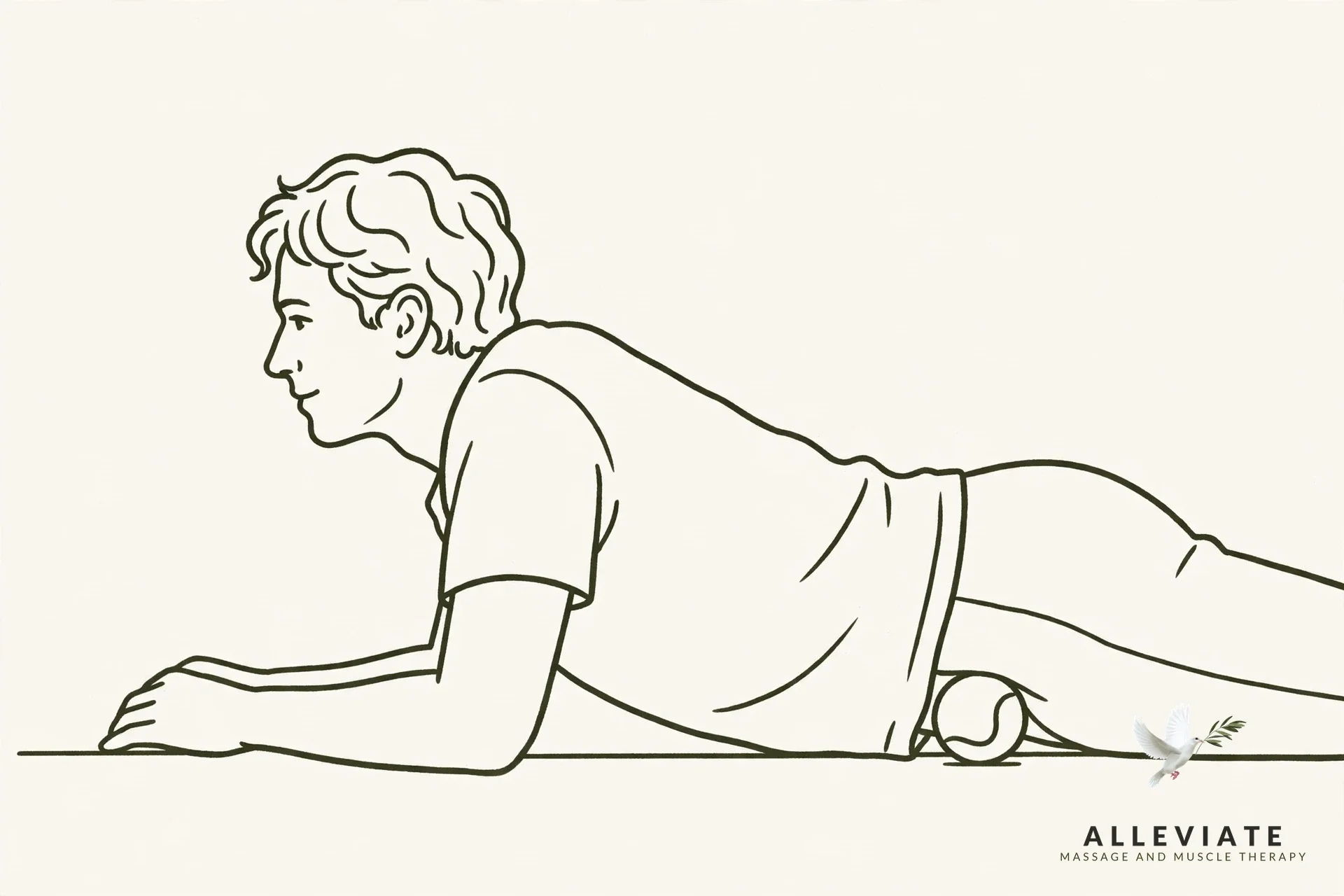
Lie on your stomach with a tennis ball placed just inside the front of one hip bone. Rest only a little of your weight on it; the pressure should feel light. Breathe slowly for a few breaths, then move the ball away. Skip this one if it feels sharp or pulsing.
Keep it comfortable
Stop if a move causes pain, tingling, or dizziness. If the discomfort keeps coming back or gets worse, check in with a healthcare professional.
More self-care ideas for Front of the hip
Want a massage? Hip flexors are hard to reach on your own. If the tight feeling keeps coming back, you are welcome to book a session.
General education only. This is not medical advice, and it does not replace care from a healthcare professional.
16. Outer hip (tensor fasciae latae)
A small muscle at the front and side of your hip helps steady your pelvis when you walk and climb stairs. It works with every step you take. You might notice the outer hip feeling tight after long walks, long drives, or a lot of time on your feet.
Before you try it
Get medical care promptly if outer hip discomfort follows a fall, you cannot put weight on that leg, or the area is swollen or badly bruised. Hip discomfort that comes with fever also needs prompt care.
Try a gentle stretch
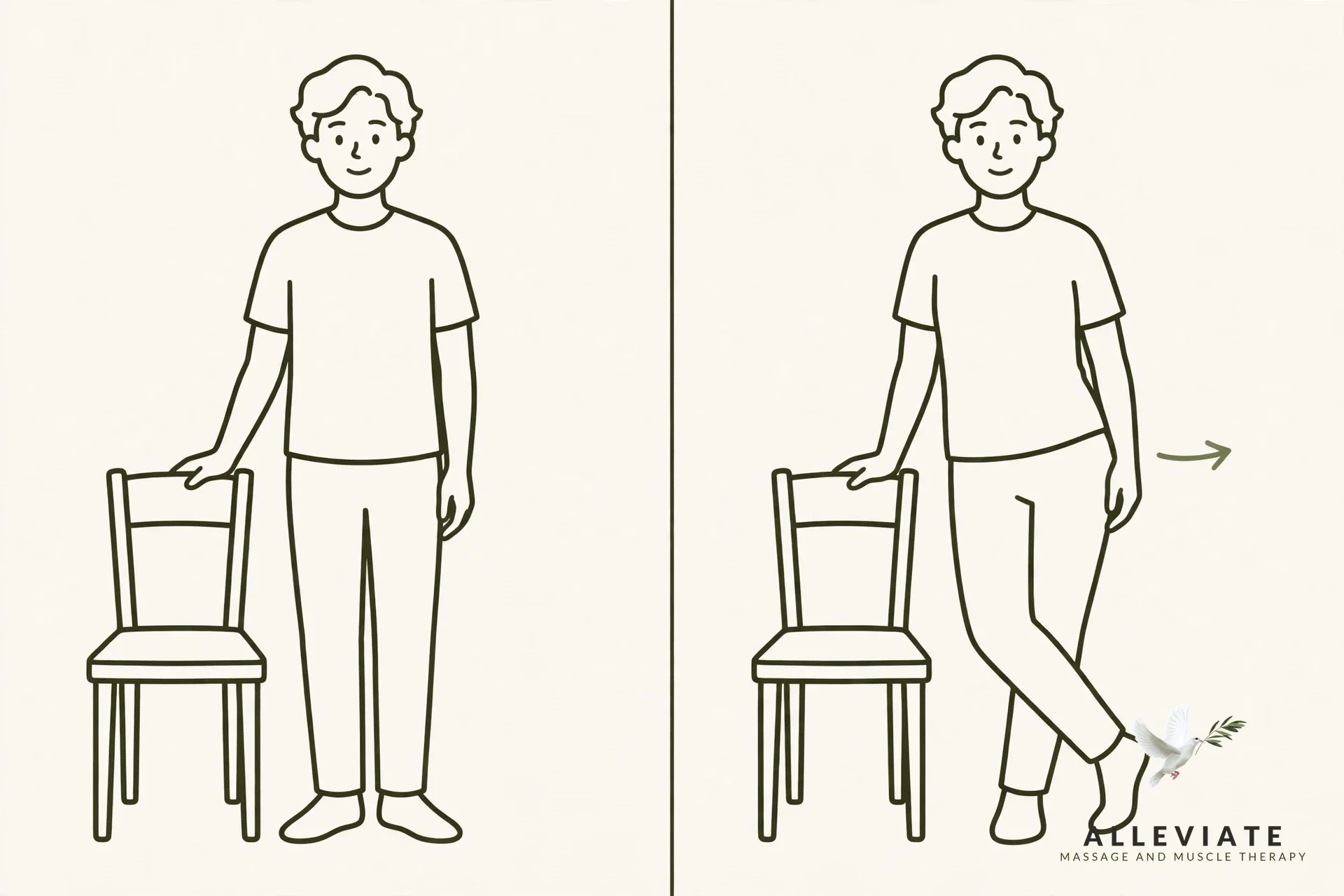
Stand and hold a chair for balance. Cross the leg you want to stretch behind the other one, then lean your hips gently toward the crossed side until you feel a light stretch along the outer hip. Hold for a few slow breaths, then switch sides.
Try gentle self-massage
Find the small, meaty spot just in front of the bone at the side of your hip. Use your fingertips to make small, gentle circles there with light pressure. A tennis ball against a wall works too: place it on that spot, lean in gently, and ease off if it feels sharp.
Keep it comfortable
Stop if a move causes pain, tingling, or dizziness. If the discomfort keeps coming back or gets worse, check in with a healthcare professional.
More self-care ideas for Outer hip
Want a massage? The outer hip is a small spot that can feel like a big one. If walking leaves it tight most days, you are welcome to book a session.
General education only. This is not medical advice, and it does not replace care from a healthcare professional.
17. Seat muscles (glutes)
The strong muscles of your seat help you stand up, climb stairs, and walk. They can feel tight after long sitting, long drives, or a hard workout.
Before you try it
Get medical care promptly if seat or leg discomfort travels below your knee and comes with numbness, tingling, or weakness, or if it follows a fall or injury.
Try a gentle stretch
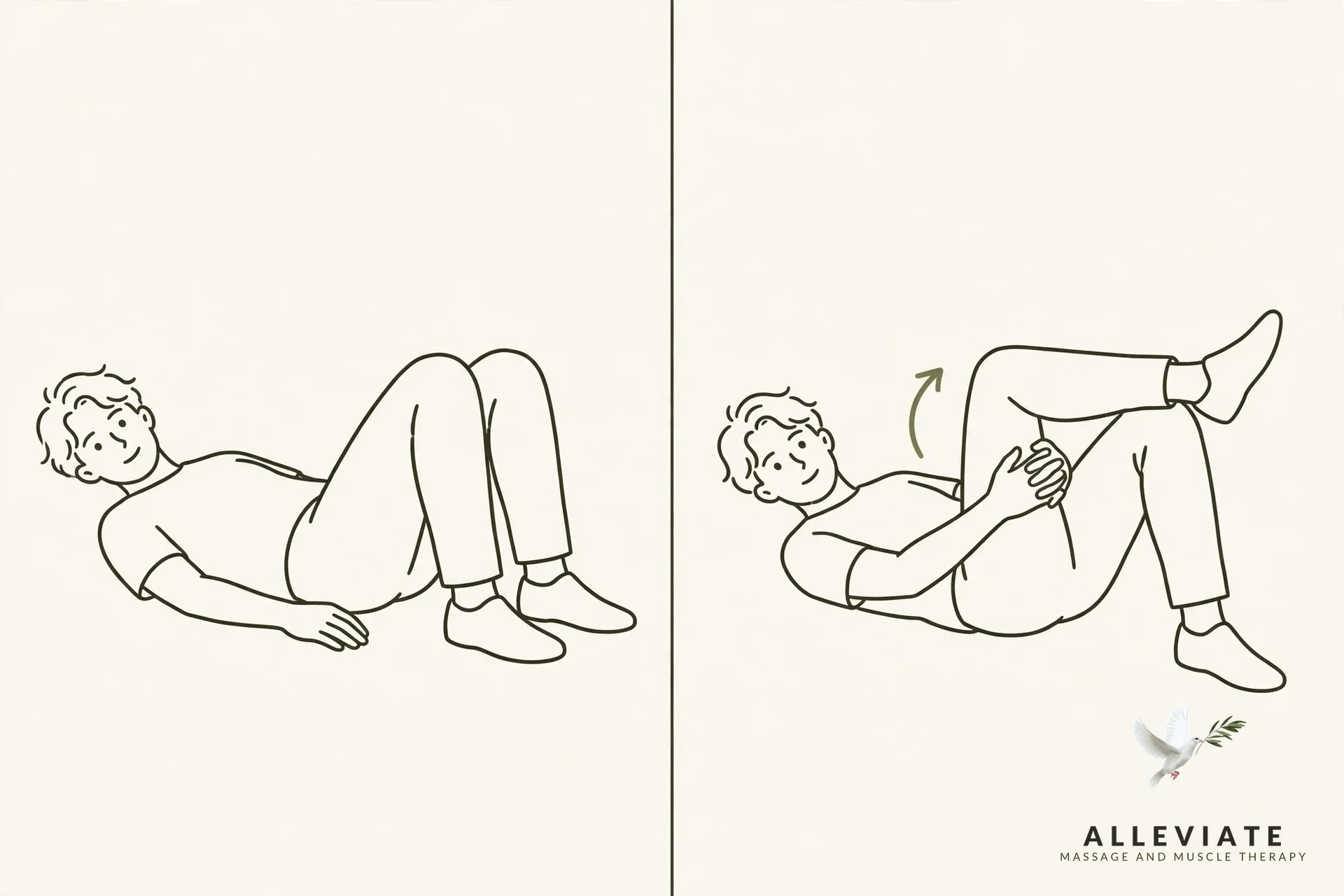
Lie on your back with both knees bent. Rest one ankle across the opposite knee. Gently draw the lower leg toward you until you feel a light stretch deep in the seat of the raised leg. Lower slowly and switch sides.
Try gentle self-massage
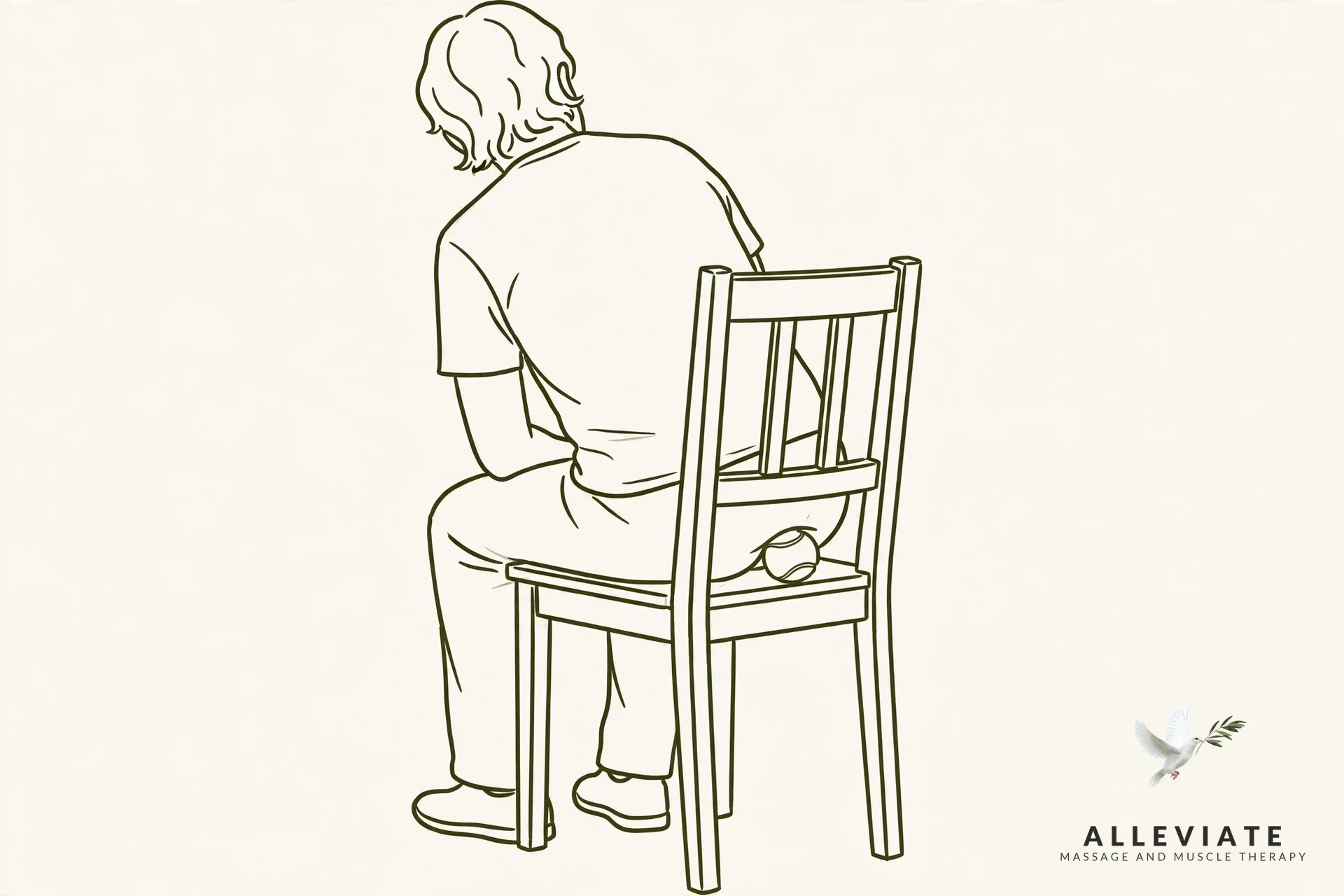
Sit on the floor or a firm chair with a tennis ball under one side of your seat, away from your tailbone. Lean your weight onto it gently until you feel light pressure, breathe slowly, then shift it an inch or two to a new spot.
Keep it comfortable
Stop if a move causes pain, tingling, or dizziness. If the discomfort keeps coming back or gets worse, check in with a healthcare professional.
More self-care ideas for Seat muscles
Want a massage? Deep seat muscles are hard to reach by yourself. If sitting all day leaves you stiff, you are welcome to book a session.
General education only. This is not medical advice, and it does not replace care from a healthcare professional.
18. Front of the thigh (quadriceps)
The large muscles at the front of your thigh straighten your knee and help you stand up, walk, and climb stairs. They work hard every time you get up from a chair or walk up a hill. You might notice them feeling tight after a long day of sitting, or tired after a day of climbing.
Before you try it
Get medical care promptly if thigh discomfort follows an injury, comes with a lot of swelling or bruising, or you cannot bend or straighten your knee. A thigh that is hot, swollen, and red also needs prompt care.
Try a gentle stretch
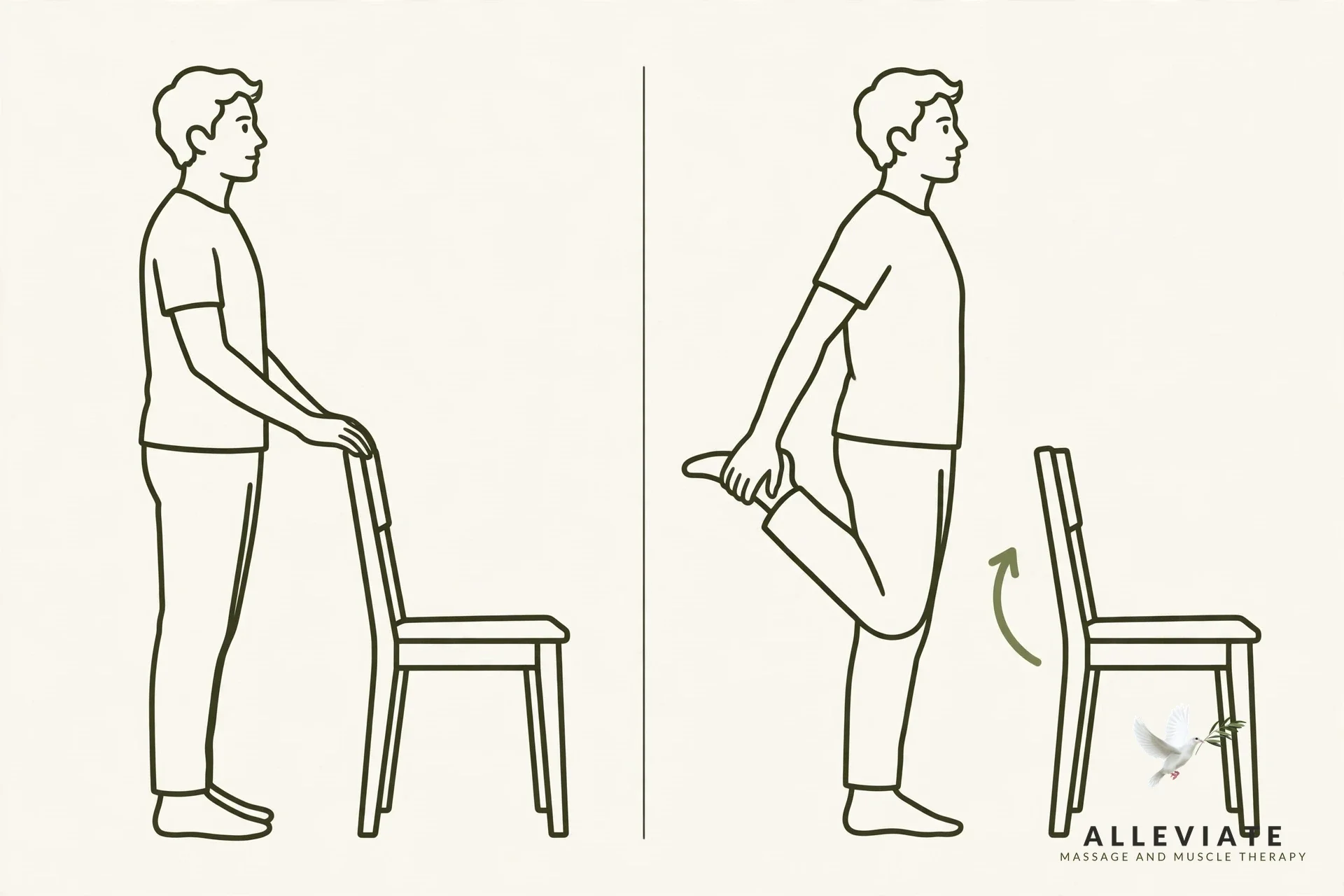
Stand and hold a chair or counter for balance. Bend one knee and bring your heel toward your seat, holding your ankle or the leg of your pants if you can reach it comfortably. Keep your knees close together and stand tall until you feel a light stretch at the front of your thigh. Hold for a few slow breaths, then switch sides.
Try gentle self-massage
Sit with your leg resting on a chair or the edge of a couch. Use the heel of your hand or your fingertips to press slowly along the front of your thigh, keeping the pressure light to moderate. A foam roller under the thigh works too: roll slowly and ease off any spot that feels too tender.
Keep it comfortable
Stop if a move causes pain, tingling, or dizziness. If the discomfort keeps coming back or gets worse, check in with a healthcare professional.
More self-care ideas for Front of the thigh
Want a massage? Thighs do the heavy lifting of the day. If stairs have started to feel like work, you are welcome to book a session.
General education only. This is not medical advice, and it does not replace care from a healthcare professional.
19. Back of the thigh (hamstrings)
The muscles at the back of your thigh bend your knee and help you walk, climb, and stand up after bending over. You might notice them feeling tight when you reach for your shoes, or after a day of yard work and bending.
Before you try it
Get medical care promptly if discomfort at the back of the thigh follows an injury, comes with a lot of swelling or bruising down the leg, or you felt a pop. Leg weakness or numbness also needs a check.
Try a gentle stretch
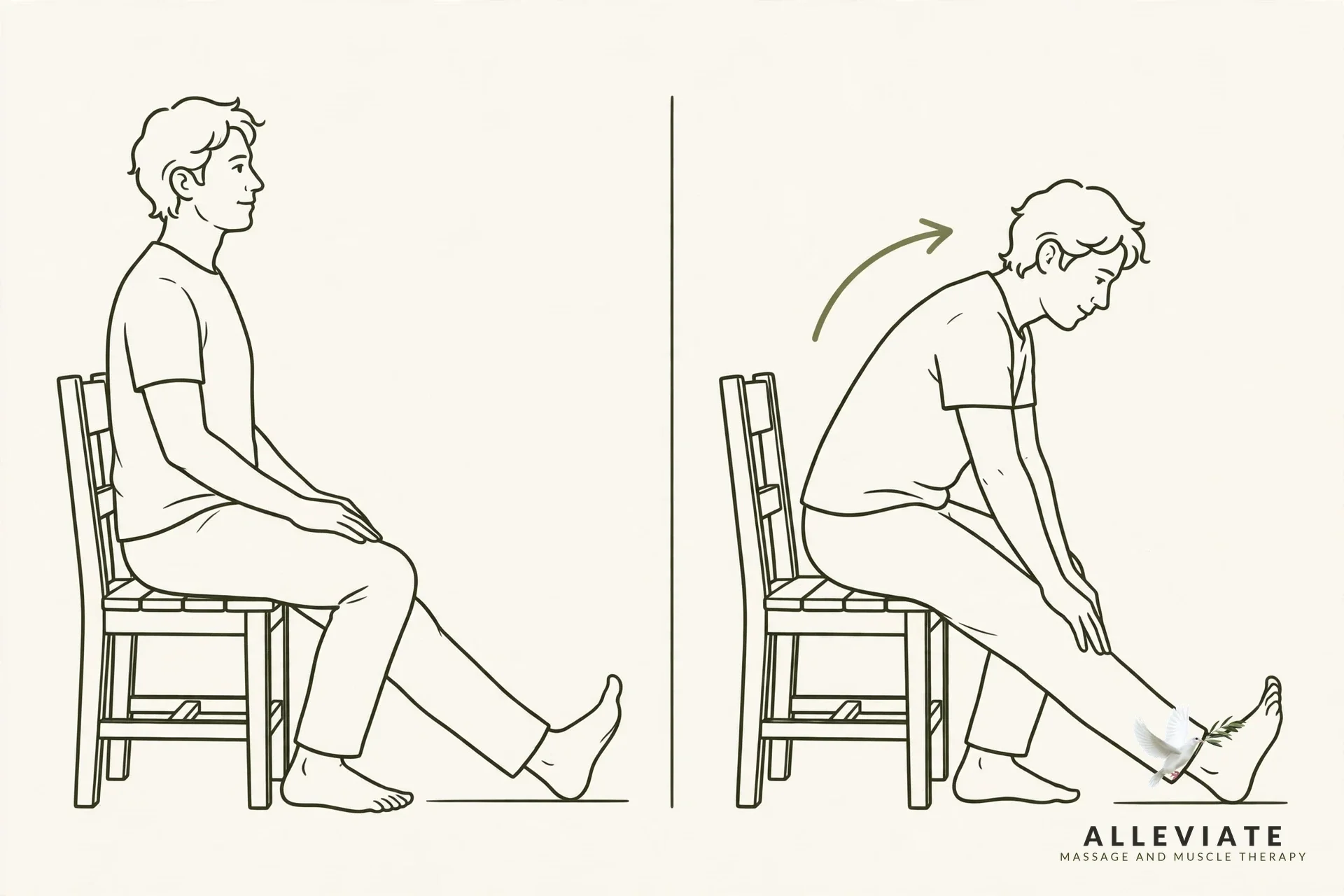
Sit on the edge of a sturdy chair and straighten one leg in front of you, with your heel on the floor and your toes pointing up. Sit tall and lean forward gently from your hips until you feel a light stretch along the back of your thigh. Hold for a few slow breaths, then switch sides.
Try gentle self-massage
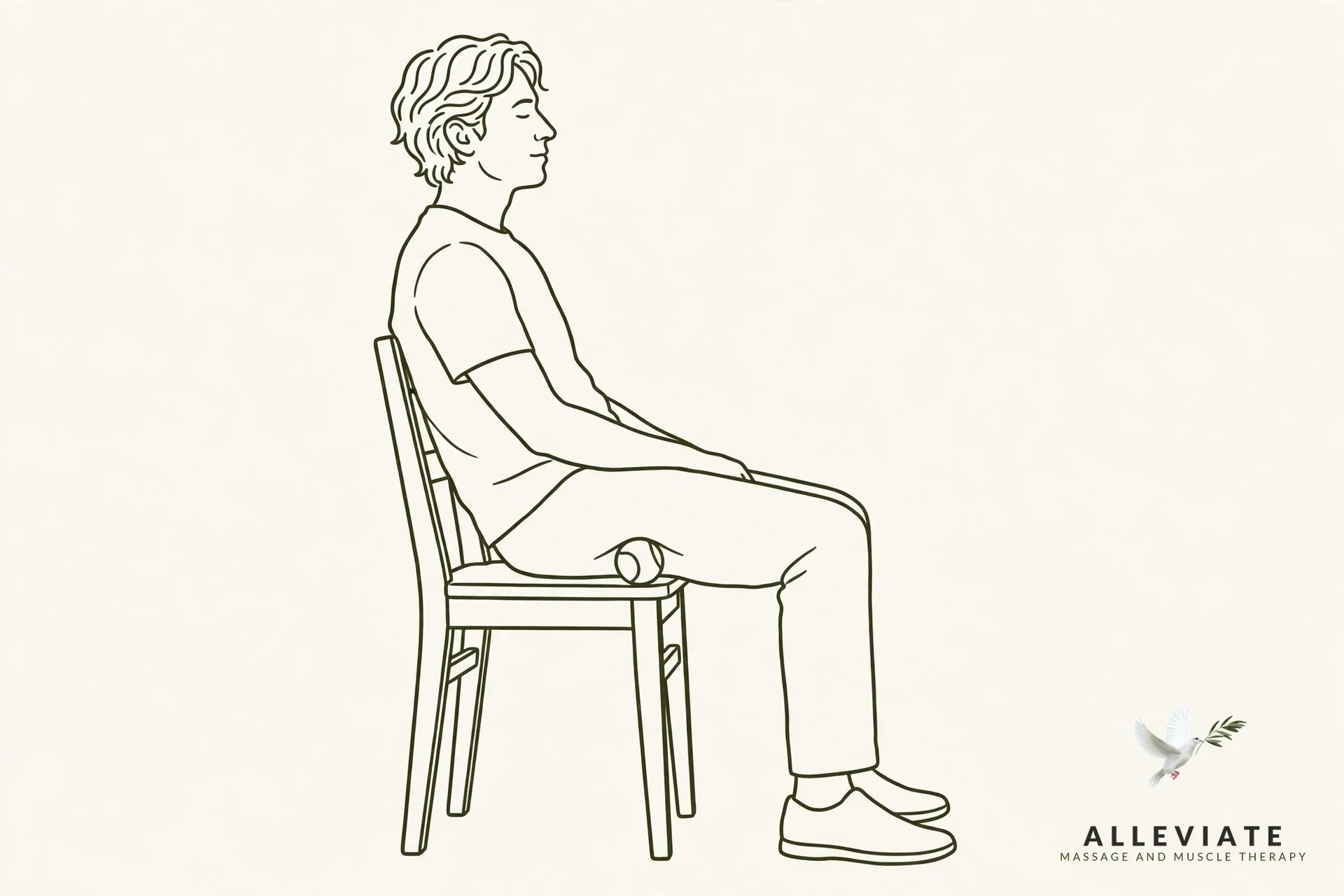
Sit on a firm chair with a tennis ball under the back of one thigh. Let the weight of your leg rest on the ball with light pressure, and shift your leg slowly to roll it a little. Move the ball to a new spot after a few slow breaths.
Keep it comfortable
Stop if a move causes pain, tingling, or dizziness. If the discomfort keeps coming back or gets worse, check in with a healthcare professional.
More self-care ideas for Back of the thigh
Want a massage? The backs of the thighs are hard to reach on your own. If bending and reaching feel tight most days, you are welcome to book a session.
General education only. This is not medical advice, and it does not replace care from a healthcare professional.
20. Inner thigh (adductors)
The muscles along your inner thigh bring your legs together and help steady you when you walk and change direction. They work when you climb stairs, get out of a car, or step sideways. You might notice them feeling tight after walking on uneven ground, or after time on the floor playing with kids.
Before you try it
Get medical care promptly if inner thigh or groin discomfort follows an injury, comes with swelling or bruising, or you felt a pop. Groin discomfort that comes with a new lump, fever, or nausea needs prompt care too.
Try a gentle stretch
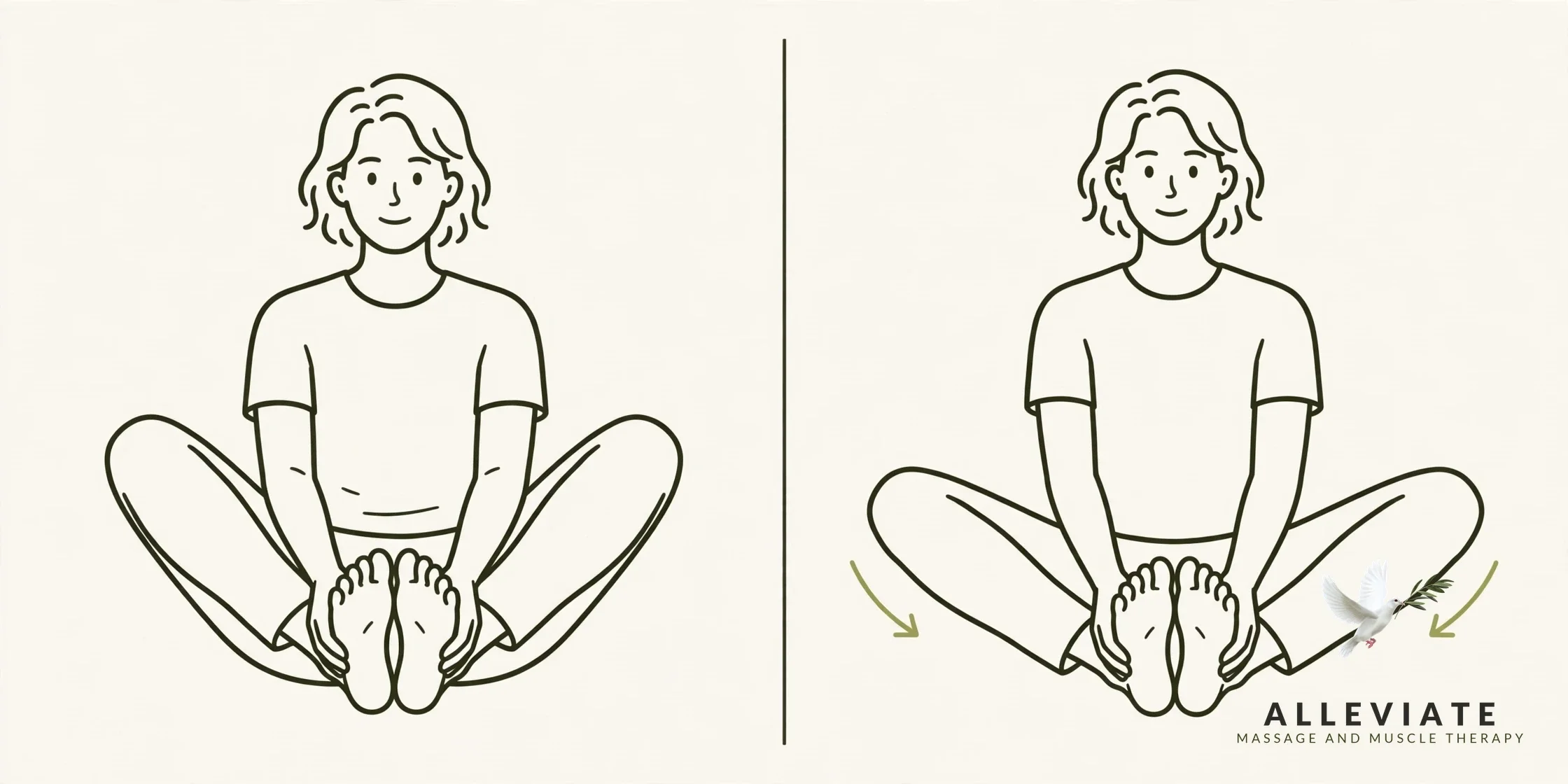
Sit on the floor or on your bed with the soles of your feet together and your knees out to the sides. Sit tall and let your knees rest open only as far as is comfortable. You may feel a light stretch along your inner thighs. Breathe slowly, then bring your knees back together gently.
Try gentle self-massage
Sit with one leg bent and the sole of your foot on the floor. Use your fingertips to press gently along the inner thigh, keeping the pressure light and staying closer to the knee than to the groin.
Keep it comfortable
Stop if a move causes pain, tingling, or dizziness. If the discomfort keeps coming back or gets worse, check in with a healthcare professional.
More self-care ideas for Inner thigh
Want a massage? Inner thighs rarely get attention until they feel tight. If yours do, you are welcome to book a session.
General education only. This is not medical advice, and it does not replace care from a healthcare professional.
21. Shins (tibialis anterior)
A muscle runs along the front of your shin, beside the bone. It lifts the front of your foot with every step, so your toes clear the ground. You might notice it feeling tired or achy after a long walk, a hike, or a day on hard floors.
Before you try it
Get medical care promptly if shin discomfort follows an injury, sits on one very tender spot on the bone, or comes with swelling. Shin or calf pain that gets worse with every walk also deserves a check. Numbness on top of the foot, or trouble lifting the front of your foot, needs prompt care.
Try a gentle stretch
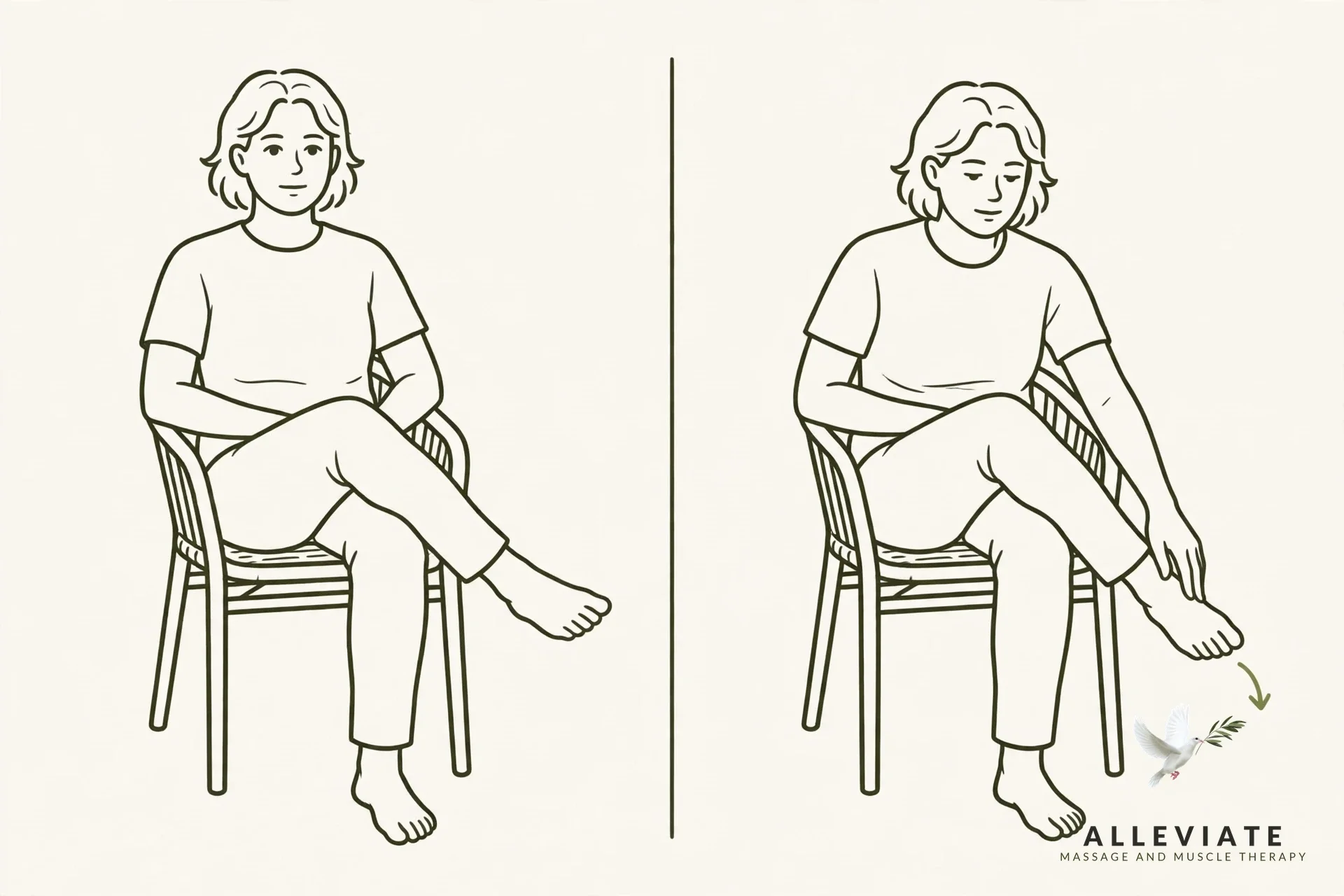
Sit in a chair and cross one ankle over the opposite knee. Point your toes gently and use your hand to ease the top of your foot down a little, until you feel a light stretch along the front of your shin. Hold for a few slow breaths, then switch sides.
Try gentle self-massage
Use your thumbs to press gently into the meaty strip just beside your shin bone, working slowly from below the knee toward the ankle. Keep the pressure light to moderate, and stay off the bone itself.
Keep it comfortable
Stop if a move causes pain, tingling, or dizziness. If the discomfort keeps coming back or gets worse, check in with a healthcare professional.
More self-care ideas for Shins
Want a massage? Shins work on every step and rarely get thanked. If long walks leave yours aching, you are welcome to book a session.
General education only. This is not medical advice, and it does not replace care from a healthcare professional.
22. Calves
Your calf muscles lift your heel with every step and help you stand on tiptoe. You might notice them feeling tight after a long day on your feet, a run, or a long drive.
Before you try it
Get medical care promptly if one calf is newly swollen, warm, red, or tender compared with the other, especially after a long trip or a period of not moving much. Calf discomfort that comes with chest pain or shortness of breath needs emergency care.
Try a gentle stretch
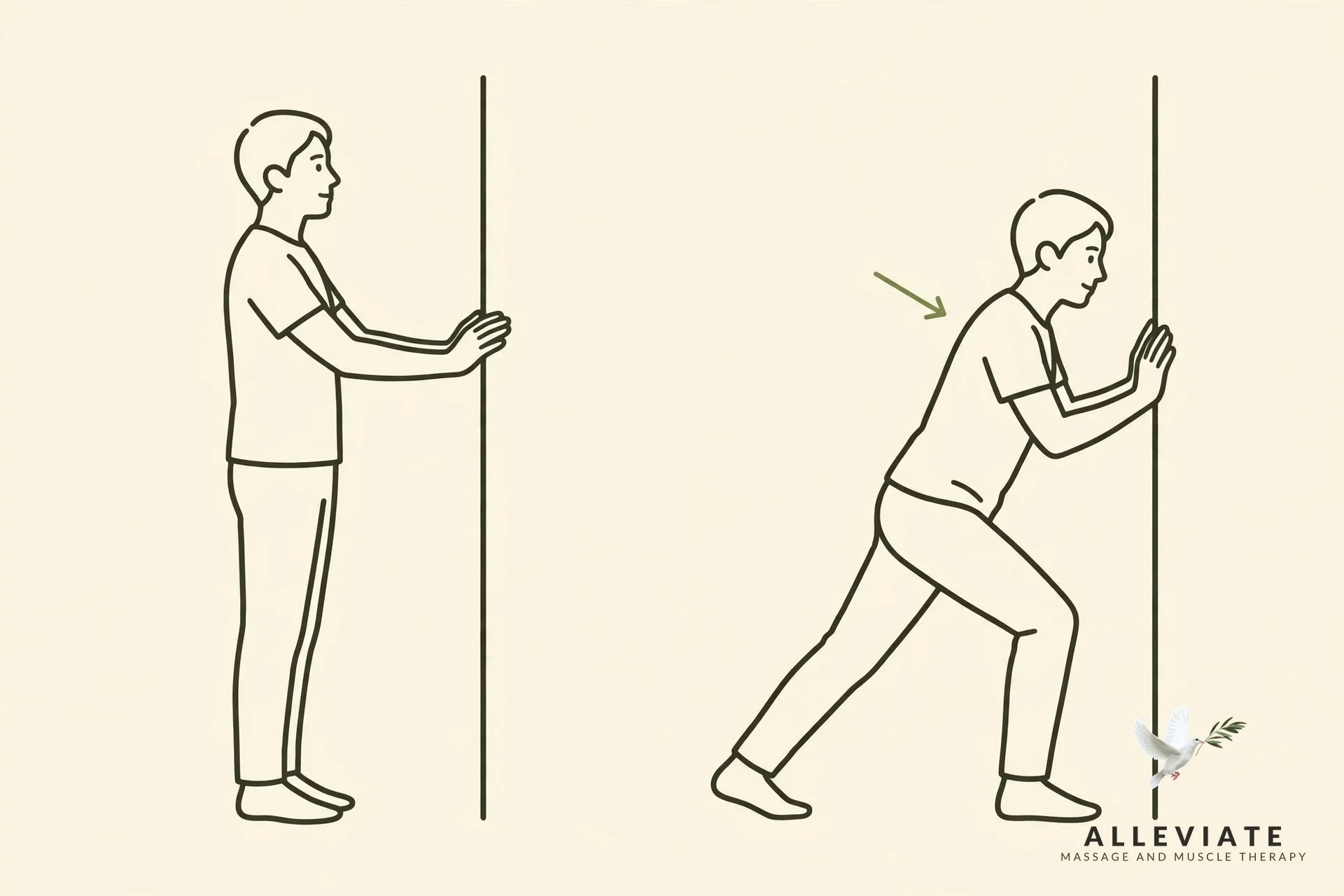
Stand facing a wall with your hands on it. Step one foot back, heel down and leg straight, and bend your front knee until you feel a light stretch in the back calf. Hold for a few slow breaths, then switch sides. To reach the deeper part lower down, repeat with the back knee bent slightly.
Try gentle self-massage
Sit with one leg crossed over the other and use your thumbs to press slowly along the meaty part of the calf, keeping the pressure light to moderate. Or roll the calf slowly over a foam roller or a tennis ball on the floor.
Keep it comfortable
Stop if a move causes pain, tingling, or dizziness. If the discomfort keeps coming back or gets worse, check in with a healthcare professional.
More self-care ideas for Calves
Want a massage? Calves take a beating on workdays. If yours never quite loosen up, you are welcome to book a session.
General education only. This is not medical advice, and it does not replace care from a healthcare professional.
23. Feet
The small muscles of your feet help you balance, push off with each step, and adjust to the ground under you. They work all day inside your shoes. You might notice your feet feeling tired or achy after a long day of standing or walking.
Before you try it
Get medical care promptly if foot discomfort comes with swelling that does not go down, a sore that is slow to heal, or color changes in your toes. If you have diabetes or poor circulation, check with your doctor before using pressure on your feet, and get any foot sore checked promptly.
Try a gentle movement
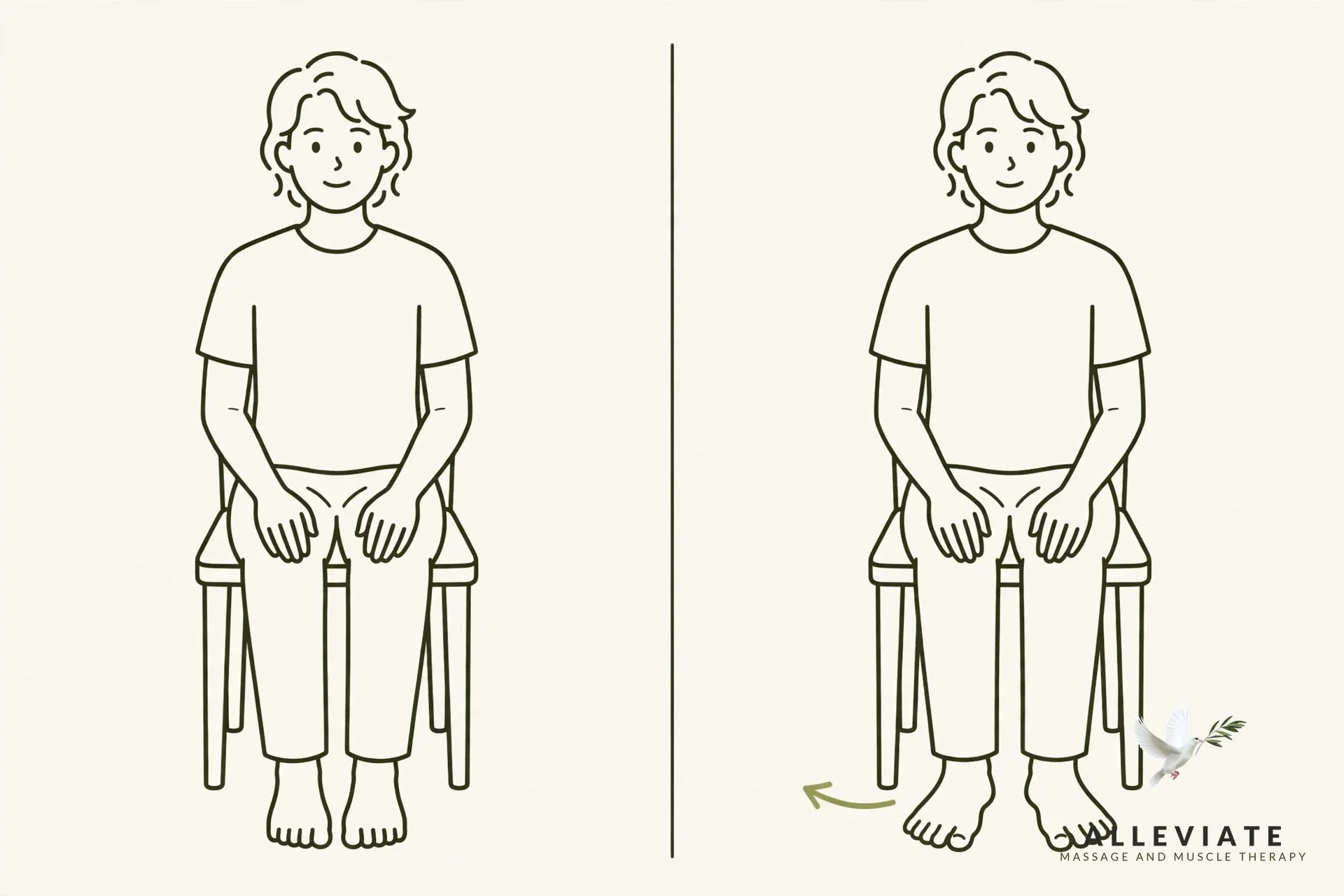
Sit with your feet flat on the floor. Slowly spread your toes apart, then relax them. Then press your toes gently into the floor and let go. Move slowly and keep it easy the whole time.
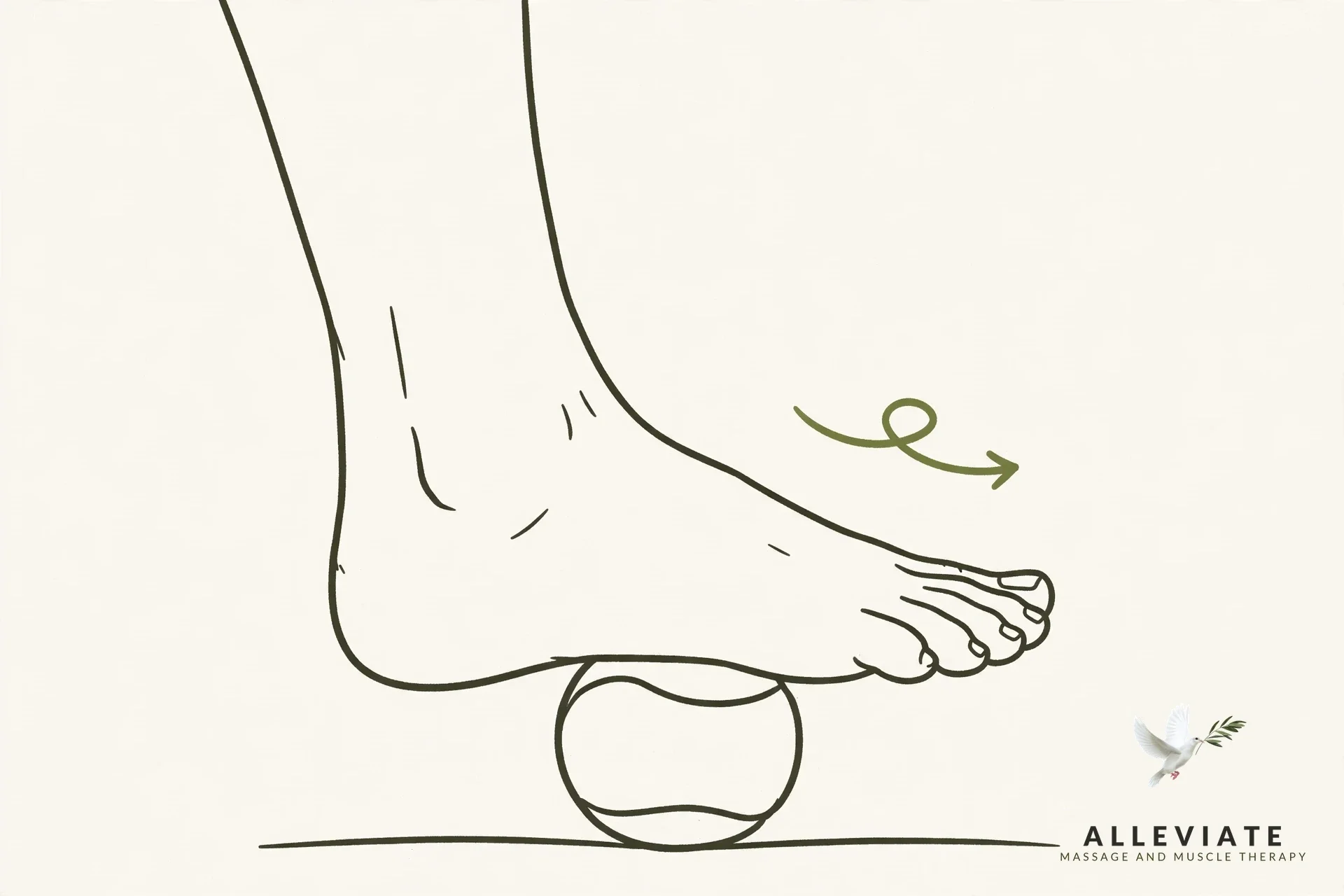
Try gentle self-massage
Sit in a chair and place a tennis ball under the sole of one foot. Roll your foot slowly over the ball, keeping the pressure light, more like a gentle press than a dig. A few slow passes from heel to toes is plenty.
Keep it comfortable
Stop if a move causes pain, tingling, or dizziness. If the discomfort keeps coming back or gets worse, check in with a healthcare professional.
Want a massage? Your feet carry you through every part of the day. If they feel tired most days, you are welcome to book a session.
General education only. This is not medical advice, and it does not replace care from a healthcare professional.